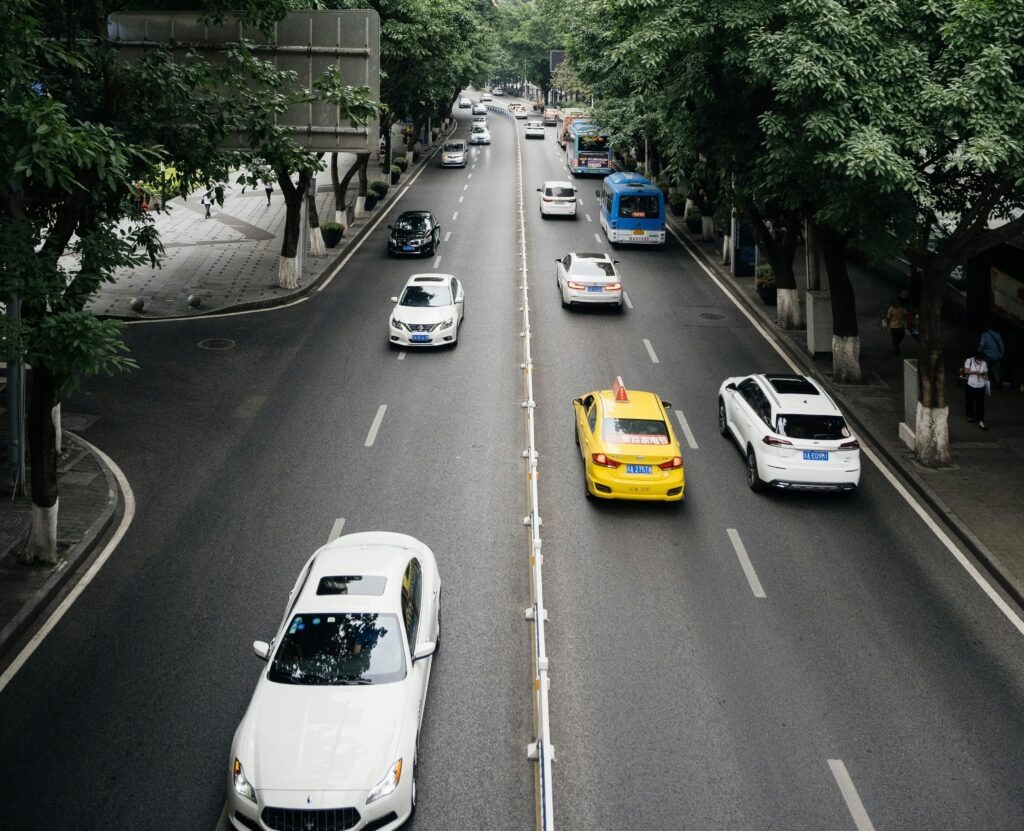
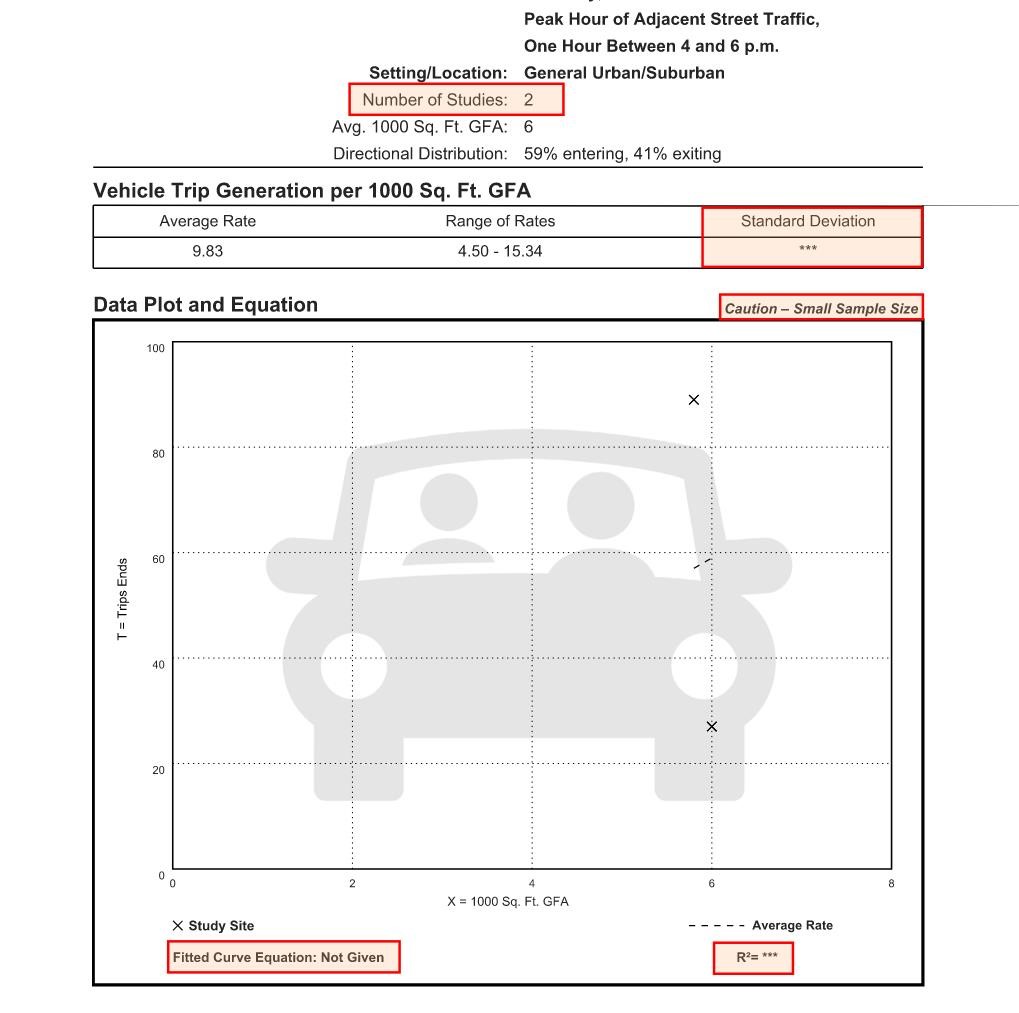
Traffic congestion is often blamed on accidents, road construction, poor infrastructure, or simply having too many vehicles on the road. While these factors certainly contribute to delays, they do not fully explain why congestion frequently develops even on highways with no visible incidents and sufficient capacity.
Traffic engineers have recognized a more fundamental problem: traffic is inherently unstable. Unlike water flowing through a pipe, traffic consists of thousands of independent drivers, each making continuous decisions based on incomplete information, individual perception, and varying levels of skill, attention, and reflexes. Small disturbances, often imperceptible to individual drivers can propagate through the traffic stream and grow into significant congestion.
Understanding these mechanisms is essential for designing safer roads, improving highway operations, and evaluating emerging technologies such as Connected and Autonomous Vehicles (CAVs).
Traffic Is Not a Fluid
Traffic flow is often described using concepts borrowed from fluid mechanics, and for many applications these analogies are useful. Engineers routinely model relationships between speed, flow, and density to understand network performance.
However, there is a critical distinction: fluids behave predictably because their particles do not make independent decisions. Drivers do.
Every vehicle on the road is controlled by an individual with unique reaction times, preferred speeds, acceleration characteristics, risk tolerance, and driving habits. Vehicles themselves vary in performance as well, a fully loaded truck cannot accelerate like a passenger car, and an experienced driver may respond differently than a novice in the same situation.
This variability means that traffic is constantly experiencing small disturbances. Under light traffic conditions these disturbances dissipate quickly. As traffic volumes increase, however, the system becomes increasingly sensitive, and minor fluctuations can escalate into widespread congestion.
The Hidden Cost of Starting From a Stop
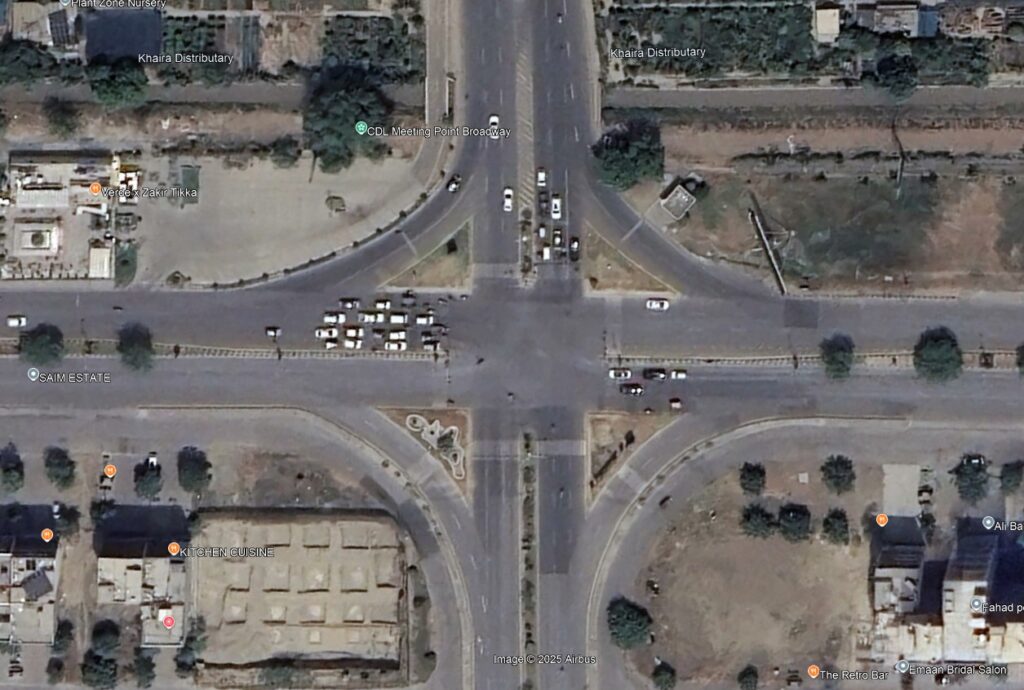
One of the simplest demonstrations of the fundamental traffic problem occurs at a signalized intersection.
When the traffic signal turns green, the first vehicle does not move immediately. The driver must perceive the signal change, decide to proceed, and begin accelerating. The second driver waits for the first vehicle to move before reacting. The third driver reacts to the second, the fourth starts blaring their horn, and so on.
Although each driver’s delay may only be a fraction of a second, these delays accumulate along the queue. By the time the twentieth vehicle begins moving, several seconds may have elapsed since the signal changed.
This phenomenon, known as start-up lost time, is one of the reasons intersections cannot discharge vehicles instantaneously. Once the queue reaches a steady discharge rate, known as the saturation flow rate, vehicles pass through the intersection at relatively consistent headways. However, the initial delay reduces the effective green time available for serving demand.
Even at a single intersection, the effects of human reaction times become measurable. Across an urban network, these small delays accumulate into significant travel time losses.
Lane Changes Introduce Disturbances
Lane changing is another seemingly ordinary driving behavior that has disproportionate effects on traffic flow.
A lane change requires a driver to identify an acceptable gap, adjust speed, and merge into another traffic stream. At the same time, surrounding drivers often respond by braking or adjusting their own positions to accommodate the maneuver.
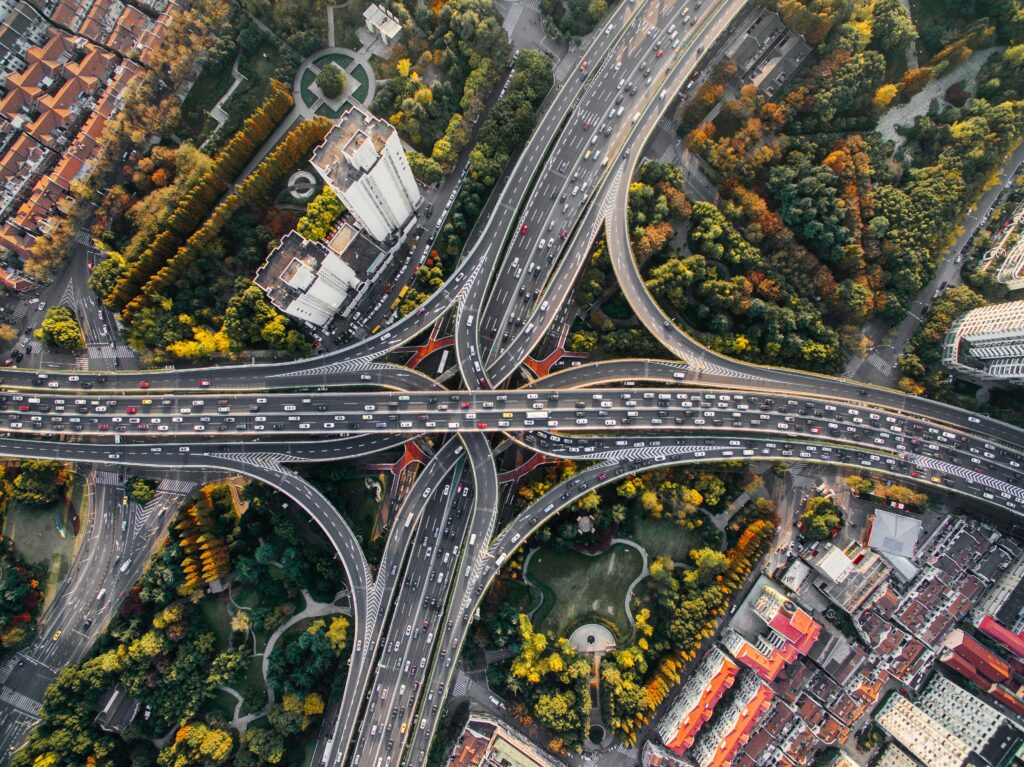
While a single lane change may appear insignificant, repeated lane changes particularly in weaving sections near freeway interchanges create localized turbulence within the traffic stream. These disturbances reduce overall roadway efficiency by interrupting otherwise stable vehicle trajectories.
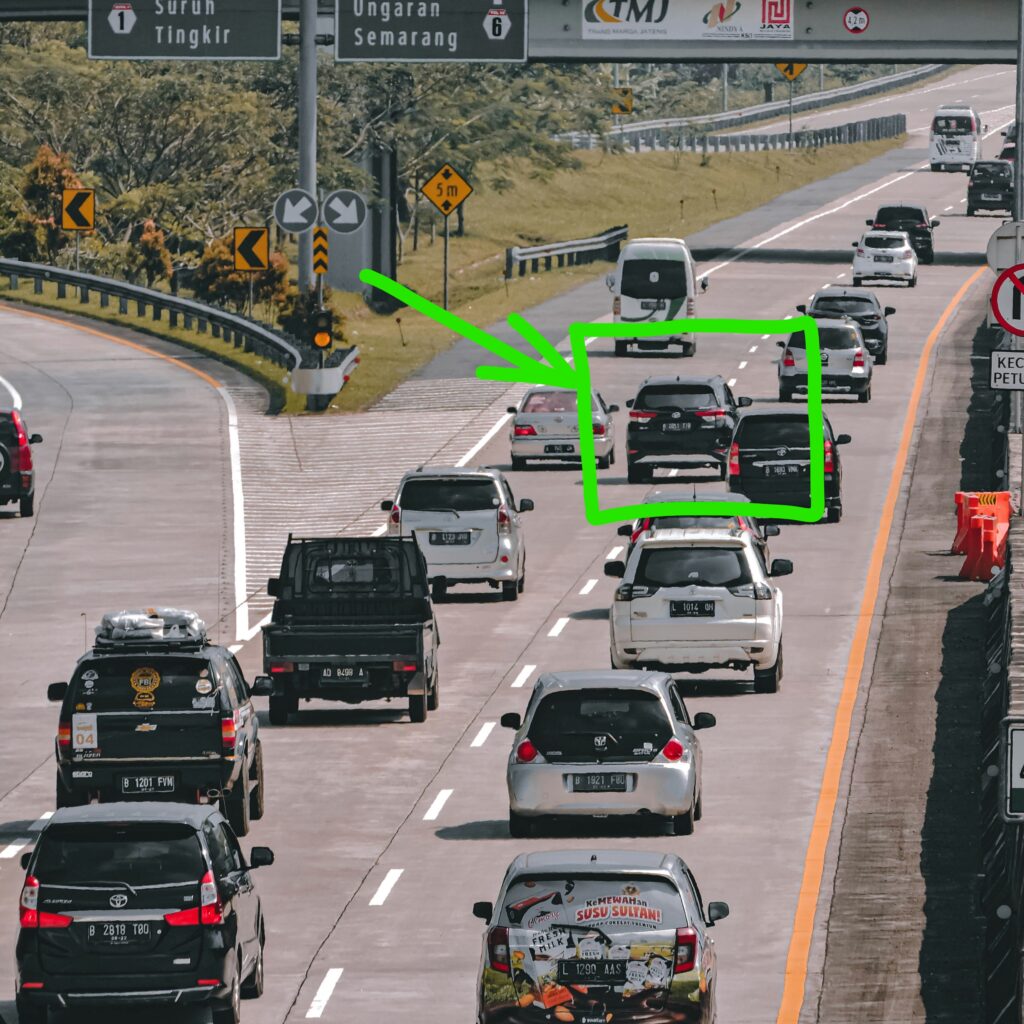
In congested conditions, unnecessary lane changing can actually reduce throughput, despite the driver’s intention of making faster progress.
This explains why weaving sections consistently represent some of the most operationally challenging segments of highway infrastructure.
Shockwaves: Traffic Jams Without a Cause
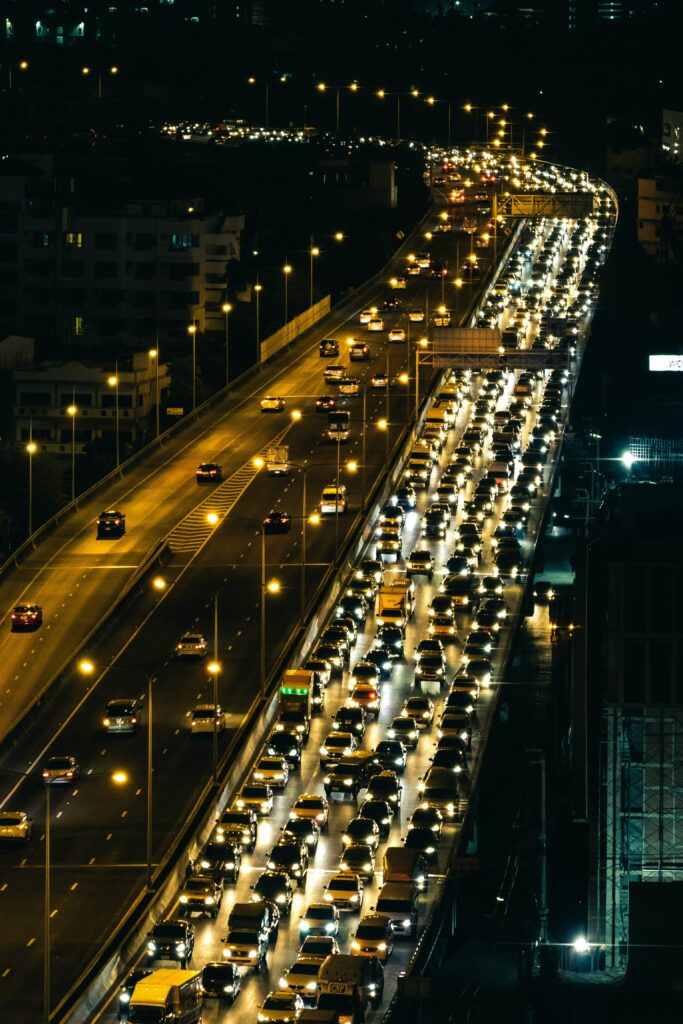
Perhaps the most fascinating manifestation of traffic instability is the formation of traffic shockwaves, sometimes referred to as phantom traffic jams.
Imagine a driver briefly reducing speed after noticing debris on the shoulder or simply becoming momentarily distracted. The following driver reacts slightly later and often brakes more aggressively to maintain a safe following distance. The next driver reacts even later, requiring a larger speed reduction.
This process repeats downstream.
Eventually, vehicles several hundred metres behind may be forced to stop completely, despite there being no accident, obstruction, or lane closure ahead.
These stop-and-go waves propagate backward through traffic even though vehicles themselves continue moving forward. Researchers have repeatedly observed such phenomena on highways around the world, demonstrating that congestion can emerge spontaneously from normal driving behavior when traffic demand approaches roadway capacity.
Shockwaves illustrate an important principle of traffic engineering: congestion does not always require an external cause. Sometimes it emerges naturally from the interactions between drivers.
The solution, drive at or slightly below the posted speed limit and maintain plenty of distance of the vehicle in front of you. Smooth and slow is faster than turbulent.
Queue Formation Is a System Response
Queues are often viewed as evidence of infrastructure failure, but from an engineering perspective they are simply the system’s response when demand temporarily exceeds the available discharge capacity.
Whenever vehicles arrive faster than they can be served, whether at an intersection, toll plaza, merge point, or freeway bottleneck, a queue forms. Once demand decreases or capacity increases, the queue gradually dissipates.
Problems arise when queues extend beyond their intended storage space.
Queue spillback can block upstream intersections, interfere with turning movements, disrupt coordinated signal timing, and ultimately affect traffic conditions across an entire network. A localized capacity constraint can therefore produce consequences far beyond its immediate location.
Understanding queue dynamics is fundamental to traffic signal design, corridor operations, and network planning.
Human and Vehicle Variability Is the Fundamental Traffic Problem
Acceleration differences, braking behavior, reaction times, lane changes, gap acceptance, distraction, and varying comfort levels all share a common characteristic: they introduce variability into the traffic stream.
Traffic systems operate most efficiently when vehicles move predictably with minimal fluctuations in speed and spacing. Human drivers, however, naturally produce continuous variation.
Traffic engineers therefore devote considerable effort to reducing unnecessary disturbances through roadway design, signal coordination, access management, lane assignment, speed management, and operational strategies that encourage smoother traffic flow.
The objective is not to eliminate human behavior, a practical impossibility, but to minimize its destabilizing effects.
Can Connected and Autonomous Vehicles Help?
Connected and Autonomous Vehicles (CAVs) offer one of the most promising opportunities to address some of the fundamental sources of traffic instability.
Unlike human drivers, automated vehicles can react almost instantaneously, maintain consistent following distances, accelerate smoothly, and communicate directly with surrounding vehicles through vehicle-to-vehicle (V2V) and vehicle-to-infrastructure (V2I) technologies.
Instead of each driver responding independently to changing traffic conditions, connected vehicles can coordinate their actions collectively. This has the potential to reduce abrupt braking, smooth acceleration profiles, improve merging operations, and dampen the formation of traffic shockwaves.
Research has shown that even a relatively small proportion of cooperative automated vehicles within the traffic stream may improve overall traffic stability by reducing the amplification of disturbances that typically occurs in human-driven traffic.
These benefits extend beyond mobility. Smoother traffic flow can also reduce fuel consumption, lower vehicle emissions, and improve road safety by decreasing the frequency of sudden braking events and rear-end collisions.
Technology Is Not a Complete Solution
Despite their potential, Connected and Autonomous Vehicles should not be viewed as a universal solution to congestion.
For decades to come, most road networks will likely consist of mixed traffic, where automated vehicles share the roadway with human drivers. The benefits of coordinated vehicle behavior will therefore be limited by the unpredictability of conventional driving.
Moreover, many causes of congestion have little to do with driver behavior. Physical bottlenecks, traffic incidents, work zones, adverse weather, special events, land use patterns, and simply having more travel demand than available roadway capacity will continue to influence network performance.
Autonomous vehicles may reduce the instability of traffic flow, but they cannot eliminate the fundamental relationship between demand and capacity. If more vehicles attempt to use a roadway than it can physically accommodate, congestion remains inevitable.
Technology can improve operations, but it cannot repeal the laws of traffic flow.
Looking Beyond Congestion
The fundamental traffic problem is not merely that there are too many vehicles on the road. It is that traffic is a dynamic system composed of thousands of independent decision-makers interacting continuously in space and time.
Every acceleration, brake application, lane change, and reaction contributes to the collective behavior of the traffic stream. Under the right conditions, these small individual actions combine to create queues, shockwaves, and congestion that seem to appear without explanation.
This understanding has shaped decades of research in traffic flow theory and continues to influence the design of modern transportation systems. As connected and autonomous technologies mature, they offer an opportunity to reduce some of the variability that has always defined human-driven traffic. Yet even the most advanced technologies will operate within the same physical constraints that have governed transportation systems for generations.
Recognizing the fundamental nature of traffic instability reminds us that effective transportation planning is rarely about finding a single solution. Instead, it is about understanding complex systems, managing variability, and designing infrastructure that remains resilient in the face of inherently unpredictable human behavior.