Traffic Analysis Tools

Peak Hour Traffic Estimator
Traffic Analysis Tools, Traffic Engineering, Transportation Planning

How to Estimate Turning Movement Counts (TMCs) from AADT or Link Volumes

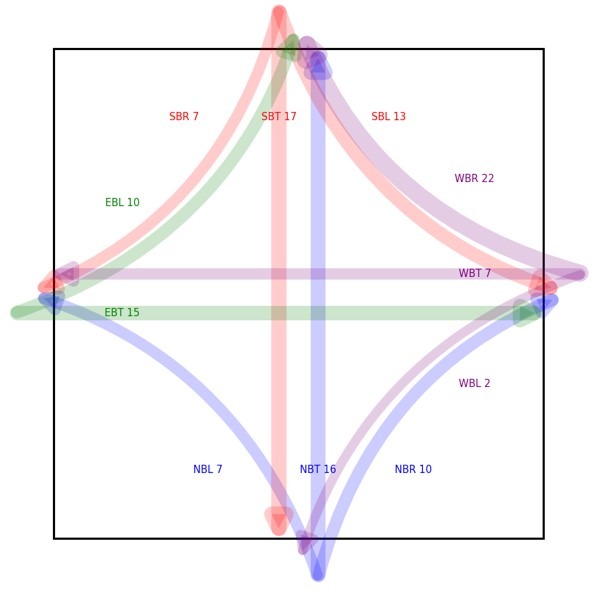
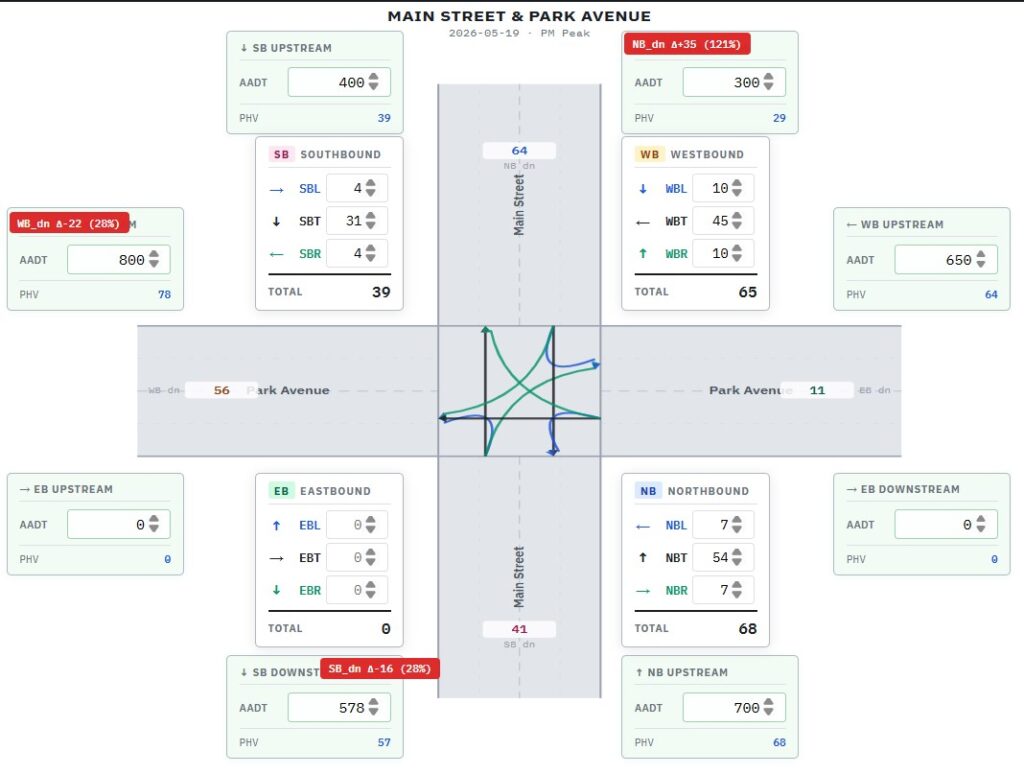
In transportation planning and traffic impact studies, a common problem is the lack of turning movement counts (TMCs). However, intersection capacity analysis still requires left, through, and right turning volumes. In practice, when turning movement counts are not available, engineers often need a structured way to estimate them from AADT or link volumes. A simple […]
, ,
Traffic Video Analytics
Traffic Analysis Tools, Traffic Engineering, Transportation Planning

How to Count Traffic from Video (AI Traffic Video Analytics Guide)

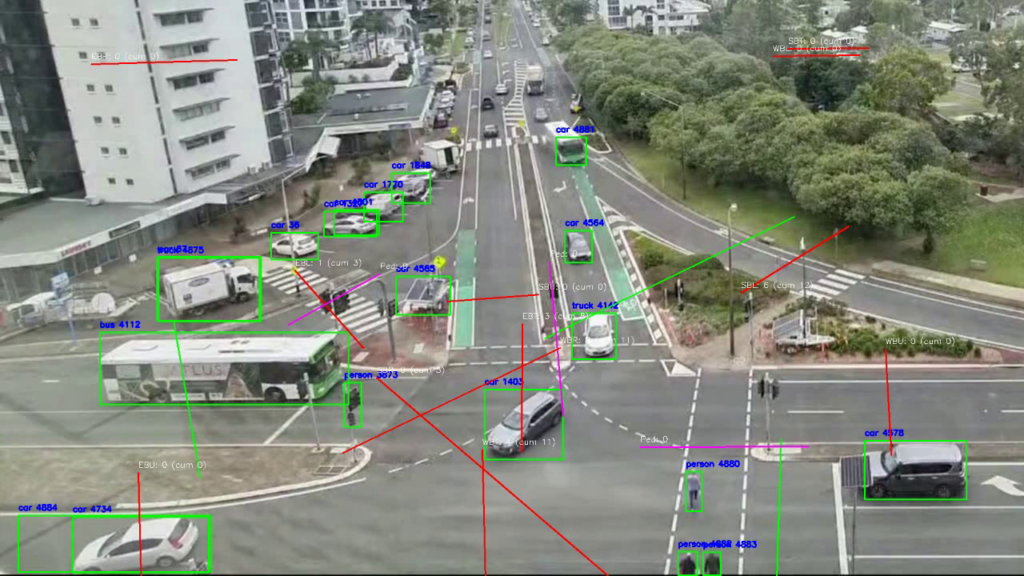
The Challenge of Counting Traffic from Video Counting vehicles from video footage is a standard part of traffic studies, but it’s also one of the most time-consuming. Whether you’re working on, a Traffic Impact Assessment (TIA), an intersection turning movement count, or general traffic data collection, manual video review quickly becomes a bottleneck. In many

, , , , , , ,
Traffic Analysis Tools, Traffic Engineering, Trainings, Transportation Planning

How to Extract LOS Tables from Synchro Reports (Step-by-Step Guide)

Traffic analysis using Synchro often involves reviewing detailed output reports to assess intersection performance. While Synchro provides comprehensive results, extracting Level of Service (LOS) data and organizing it into a clean, report-ready table can be a time-consuming step, especially for larger networks. This guide outlines the typical process for extracting LOS tables from Synchro reports

, , , ,
turn lane warrant AASHTO
Highway Design, Pavement, Traffic Analysis Tools, Traffic Engineering, Transportation Planning

Turning Lane and Auxiliary Lane Design: Warrants, Criteria, and Best Practices

One of the most common questions in traffic impact assessments (TIAs) is whether to propose turning lanes, acceleration lanes, or deceleration lanes. While adding lanes may seem like a straightforward solution to congestion, proposing them without justification can create unnecessary cost, invite reviewer comments, or even compromise safety. In this post, we’ll explain when to

, , , , ,
Calculate Construction Traffic
Highway Design, Pavement, Traffic Analysis Tools, Traffic Engineering, Transportation Planning

How to Estimate / Calculate Construction Traffic for Pavement Design

When designing roads, access drives, or service lanes around a development, engineers often focus on long-term operational traffic. However, in many projects, the most damaging traffic occurs during construction, not after completion. Heavy dump trucks, concrete mixers, low-bed trailers, and cranes can impose axle loads far greater than normal service vehicles. If construction traffic is

, , , , , , , , ,
Ai traffic counts
Traffic Analysis Tools, Traffic Engineering, Transportation Planning

AI Traffic Counting: The Smarter Way to Collect Traffic Data

Traffic data is essential for city planners, transportation engineers, and traffic management authorities. Traditionally, collecting traffic counts has been a labor-intensive, slow, and sometimes error-prone process. But with advances in artificial intelligence, traffic counting has become faster, more accurate, and more cost-effective. Arterials has developed an AI Traffic Counter —a solution designed to simplify traffic

, , , ,
Traffic Analysis Tools, Traffic Engineering, Trainings, Transportation Planning

How to Use Synchro for Left-Hand Drive Traffic Networks

Synchro, a traffic signal optimization and simulation software by Trafficware (now part of Cubic), is only in right-hand drive (RHD) orientation, so its a common problem for traffic engineers analysing networks in Left hand drive countries, making them default to other software such as SIDRA or Vistro. Why Synchro is Preferred Despite RHD Limitation Synchro

, , , , , , , , , , , , , , , , , , , ,
Scroll to Top