Traffic Engineering

ITE Institute of Transportation Engineers Arterials
Traffic Engineering, Trainings, Transportation Planning

What Is ITE (Institute of Transportation Engineers) — And Why Every Transportation Professional Should Know About It

Transportation planning and traffic engineering are rapidly evolving — from traditional road design to smart mobility, AI-driven analytics, and sustainable transport. Yet behind all this progress, there’s one global organization quietly connecting professionals, setting standards, and advancing the field: the Institute of Transportation Engineers (ITE). Whether you’re a student, engineer, planner, or researcher, understanding ITE […]

, , , ,
artificial intelligence traffic engineering
Traffic Engineering, Transportation Planning

How Artificial Intelligence Is Transforming Transportation Planning and Traffic Engineering

Transportation planning is becoming more complex than ever. Cities are expanding, travel behavior is shifting, and decision-makers are under pressure to deliver data-driven, sustainable solutions. Traditionally, transportation planners relied on manual surveys, static models, and limited datasets to understand how people and vehicles move. But with the explosion of digital data; GPS traces, camera feeds,

, , ,
Ai traffic counts
Traffic Analysis Tools, Traffic Engineering, Transportation Planning

AI Traffic Counting: The Smarter Way to Collect Traffic Data

Traffic data is essential for city planners, transportation engineers, and traffic management authorities. Traditionally, collecting traffic counts has been a labor-intensive, slow, and sometimes error-prone process. But with advances in artificial intelligence, traffic counting has become faster, more accurate, and more cost-effective. Arterials has developed an AI Traffic Counter —a solution designed to simplify traffic

, , , ,
Traffic PCU PCE Converter Calculator
Highway Design, Traffic Engineering, Transportation Planning

What is PCU (Passenger Car Unit) in Traffic Engineering?

When analyzing roads, intersections, and traffic flow, engineers face a common challenge: vehicles are not all the same. A car, a motorcycle, a truck, and a rickshaw each take up different amounts of road space, move at different speeds, and influence congestion differently. To solve this, transportation engineers use the Passenger Car Unit (PCU) —

, , , , , , , , ,
Traffic Impact Assessment TIA Guidelines
Traffic Engineering, Trainings, Transportation Planning

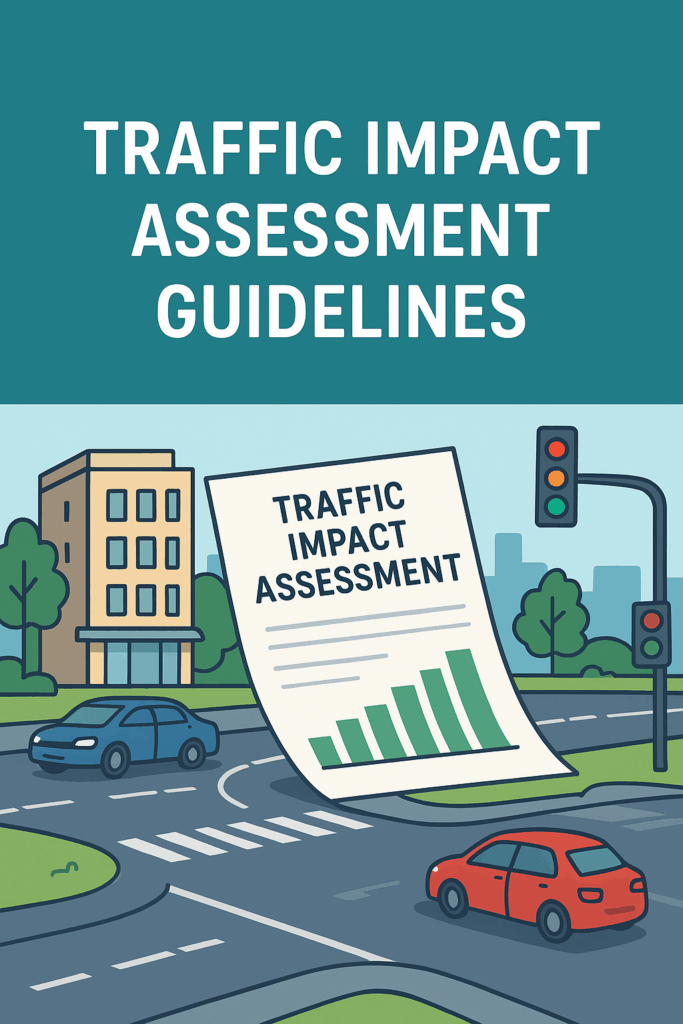
Traffic Impact Assessment (TIA) Guidelines for Municipalities

Traffic Impact Assessments (TIAs) are critical tools that help municipalities understand how new developments will affect local transportation networks. These TIA guidelines provide a practical framework for preparing and reviewing TIAs in municipalities that do not yet have their own standards. The intent is to balance technical credibility with simplicity, ensuring municipalities can review studies

, , , , , , , , , , , ,
What is AADT
Highway Design, Pavement, Traffic Engineering, Transportation Planning

What is AADT (Annual Average Daily Traffic) in Traffic Engineering?

Annual Average Daily Traffic (AADT) is one of the most fundamental measures in traffic engineering and transportation planning. It represents the average number of vehicles that travel on a roadway segment each day over the course of an entire year. Put simply, it is a way to smooth out traffic variations across weekdays, weekends, and

, , , , , , , , ,
k factor
Traffic Engineering, Trainings

Understanding the K-Factor in Traffic Engineering

In traffic engineering, the K-factor is a critical parameter used in roadway design and traffic analysis. It represents the proportion of Annual Average Daily Traffic (AADT) that occurs during the design hour, and it allows engineers to size and evaluate roadways for their most critical operating conditions. Trying to calculate a traffic signal warrant? Try

, , , , , , , , , , ,
Adapting Road and Rail Networks to Climate Change
Pavement, Public Transit, Transportation & Climate Resilience, Transportation Planning

Adapting Road and Rail Networks to Climate Change & Extreme Weather

Why Climate Resilience Matters Climate change is no longer a distant risk—it is a present-day reality. Rising temperatures, heavier rainfall, stronger storms, and frequent flooding are directly affecting how transport systems operate. Road and rail networks, designed for “historical” weather conditions, are increasingly vulnerable to climate extremes that disrupt connectivity, raise maintenance costs, and endanger

, , , , , , , , , ,
traffic signal warrant calculator
Traffic Engineering, Trainings, Transportation Planning

Understanding Signal Timing Plans: Key Terms and Control Types

Traffic signals are at the heart of modern intersections. Their timing not only dictates how efficiently traffic flows but also affects safety, pedestrian accessibility, and overall network performance. To design or evaluate a signal plan, engineers rely on a set of technical terms that describe how green, yellow, and red indications are distributed across phases

, , , , , ,
travel demand model
Public Transit, Traffic Engineering, Transportation Planning

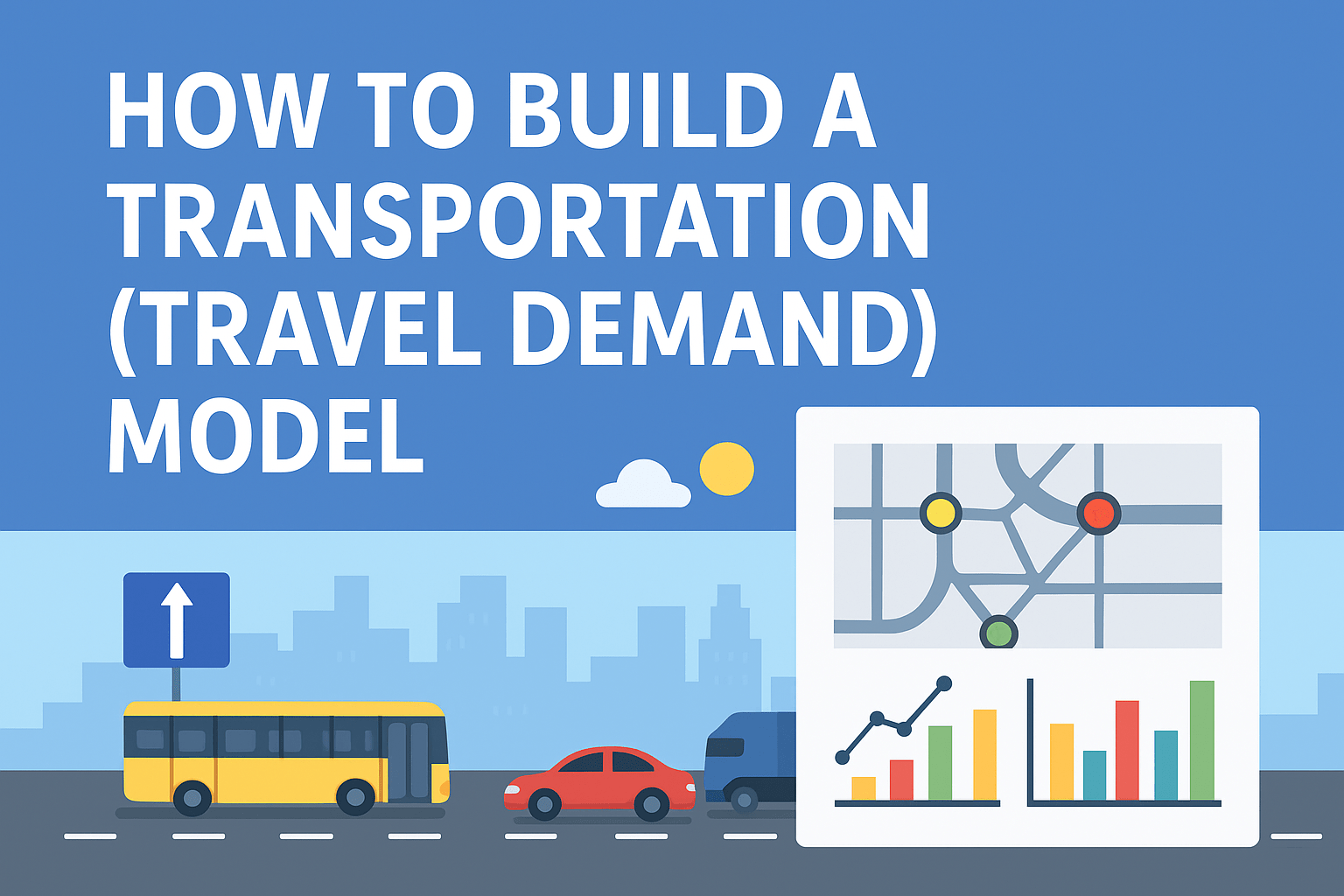
How to Build a Transportation (Travel Demand) Model: A Practitioner’s Guide

A transportation (travel demand) model is a quantitative framework that forecasts how people and goods move through a region under different land-use and network scenarios. Done well, a model becomes a decision engine: it helps test road and transit projects, pricing policies, and growth plans before spending real money. This guide covers when you actually

, , , , , , , , , , , , , ,
Scroll to Top