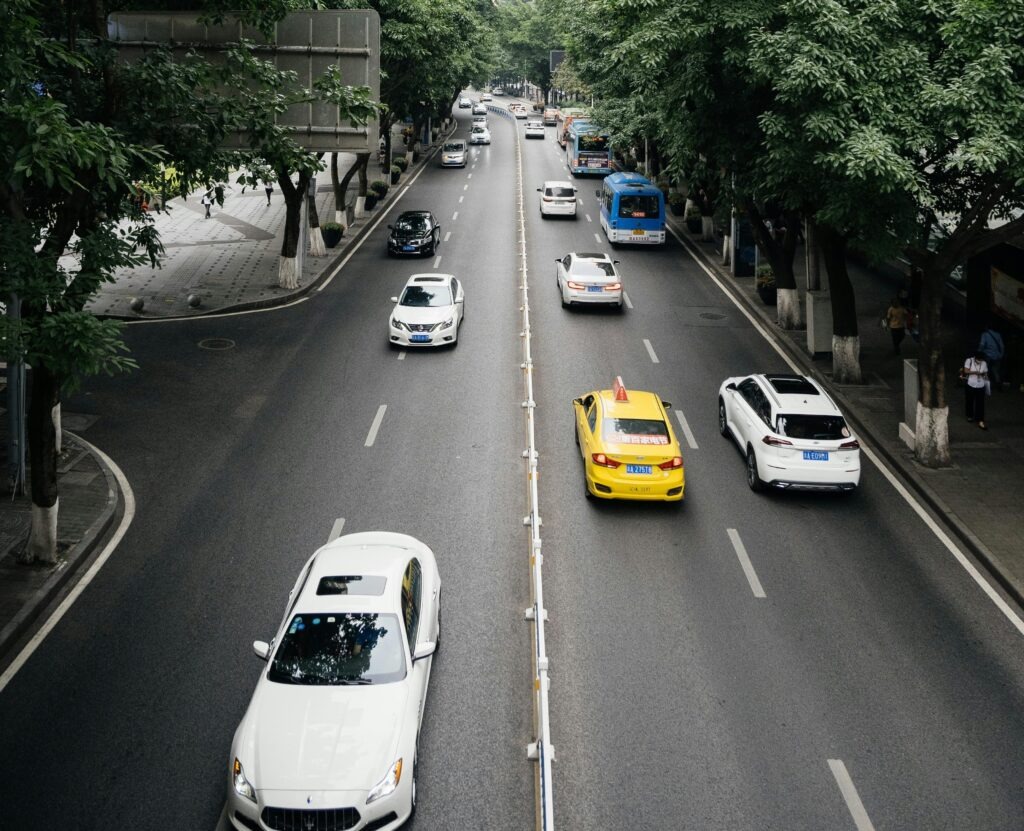
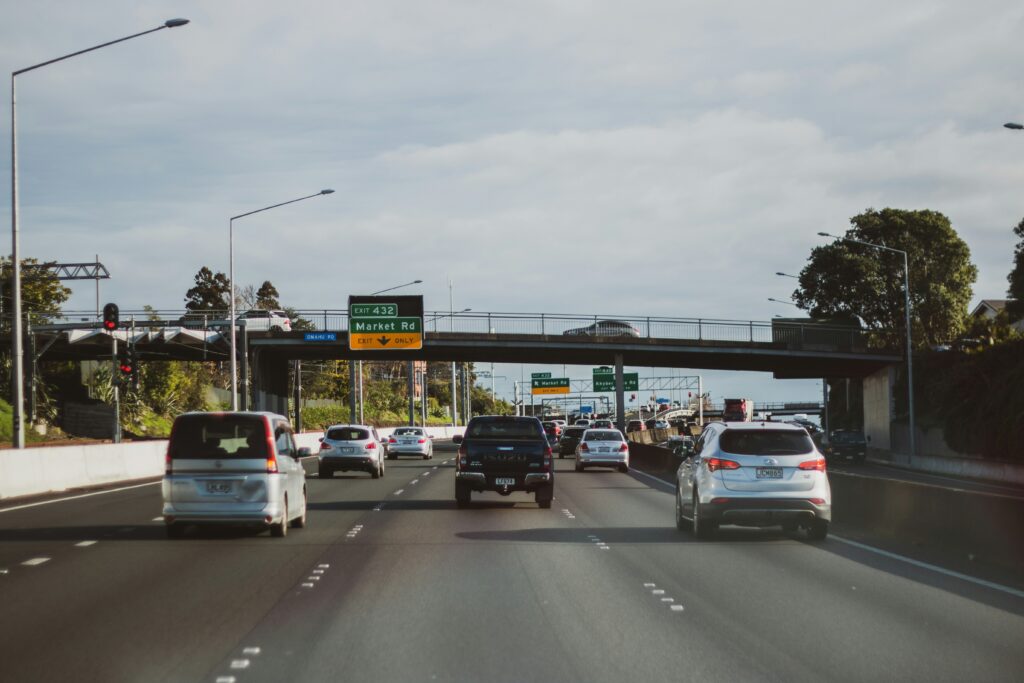
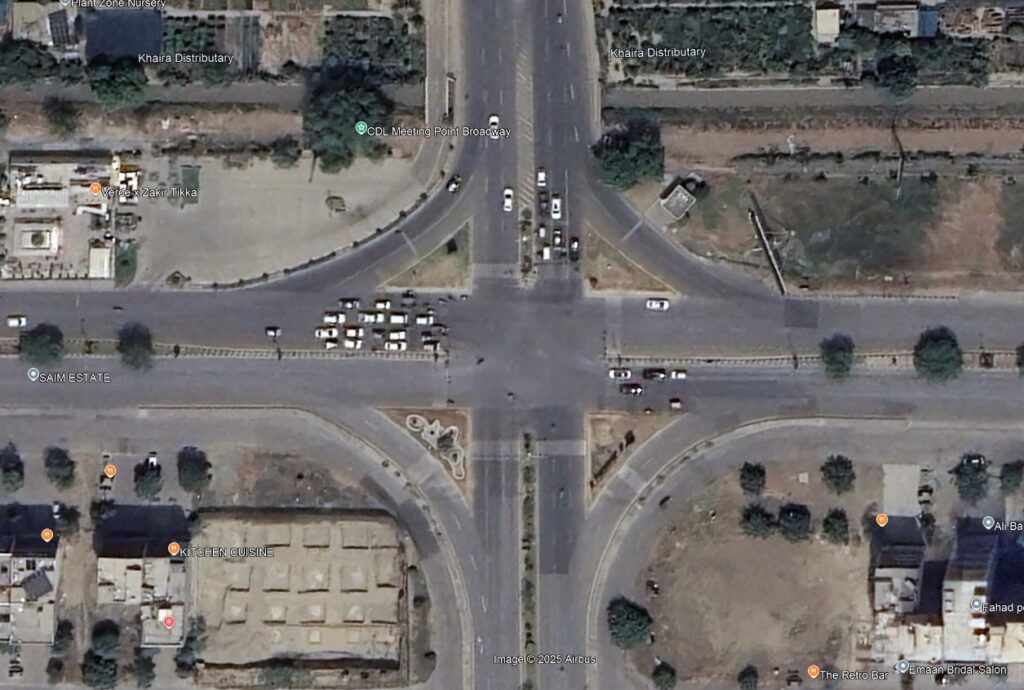
When analyzing roads, intersections, and traffic flow, engineers face a common challenge: vehicles are not all the same. A car, a motorcycle, a truck, and a rickshaw each take up different amounts of road space, move at different speeds, and influence congestion differently.
To solve this, transportation engineers use the Passenger Car Unit (PCU) — also known as the Passenger Car Equivalent (PCE). This simple but powerful tool allows us to convert a mixed stream of vehicles into a common unit, making traffic analysis more consistent and comparable.
What is a PCU or PCE?
A Passenger Car Unit is a factor that expresses how much impact a certain type of vehicle has on traffic compared to a standard passenger car.
- A car is defined as 1.0 PCU.
- A motorcycle is lighter and more maneuverable, so it may count as 0.5 PCU.
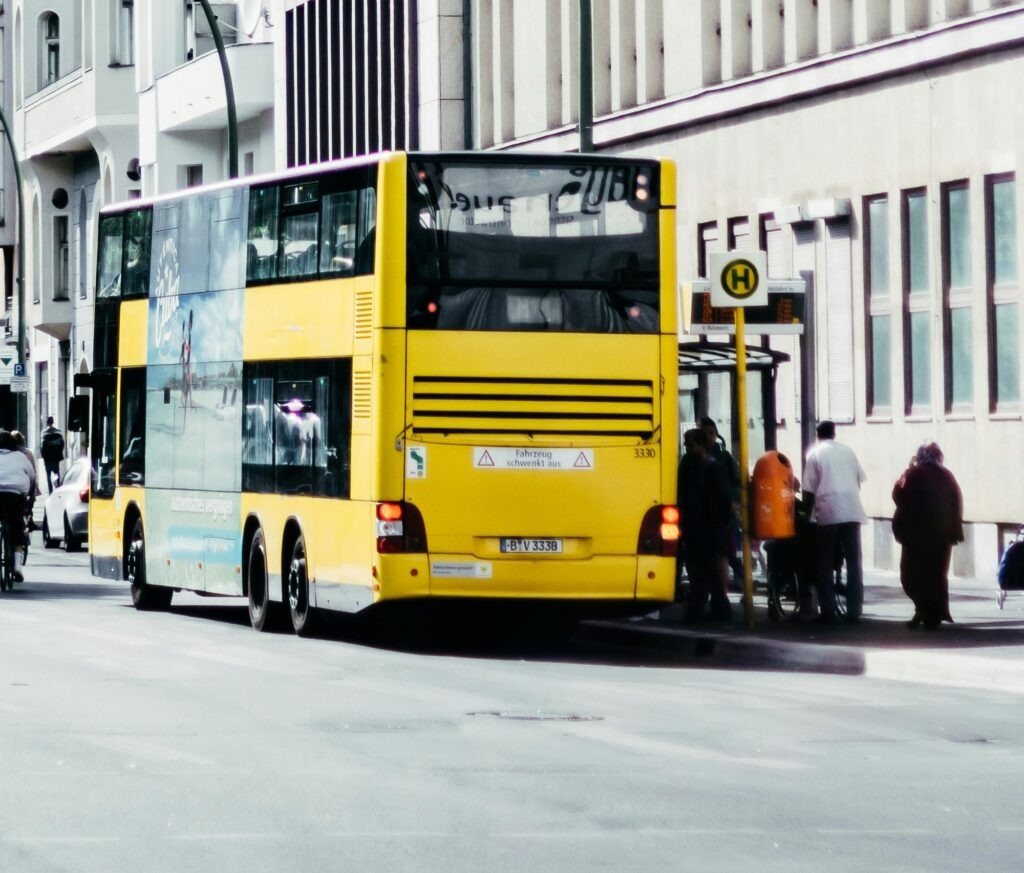
- A bus takes up much more road space and disrupts flow, so it might be 3.0 PCU.
- A heavy truck could be 4.0–5.0 PCUs.
By multiplying the number of vehicles in each category by their respective PCU factors, engineers can estimate the total PCU per hour — a standardized measure of traffic volume.
Typical PCU Factors
The exact PCU values vary by country and road condition, but some commonly used defaults are:
- Bicycle → 0.3
- Motorcycle → 0.5
- Rickshaw → 0.8
- Car/Taxi → 1.0
- Jeep/HiAce/Wagon → 1.5
- Bus → 3.0
- 2–3 Axle Truck → 4.0
- 5-Axle Truck → 5.0
- Tractor Trolley → 4.0
- Animal Cart → 5.0
These are the same defaults included in our online PCU Calculator, which you can adjust as needed for your project.
Why Do Engineers Use PCUs?
Mixed traffic conditions — especially in countries like Pakistan, India, and other developing regions — include everything from motorcycles and rickshaws to buses and trucks. Using just vehicle counts is misleading because:
- 100 motorcycles don’t cause the same congestion as 100 cars.
- 10 trucks can occupy the space of 40 cars or more.
Converting to PCUs makes it possible to:
- Assess roadway capacity more accurately.
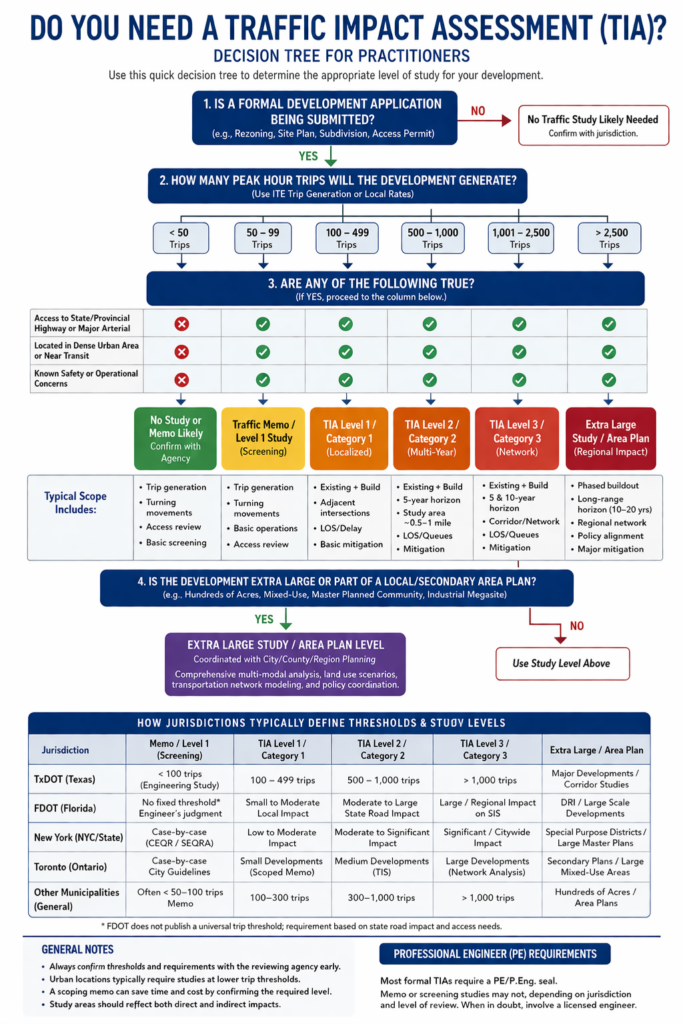
- Evaluate traffic impact studies for new developments.
- Design signal timings at intersections.
- Support pavement design calculations.
How to Calculate PCU
The PCU formula is straightforward:
Total PCU=sum(Ni x PCUi)
Where:
- Ni = Number of vehicles of type i
- PCUi = PCU factor for that vehicle type
Example:
- 200 cars (1.0 PCU each) = 200 PCUs
- 100 motorcycles (0.5 PCU each) = 50 PCUs
- 50 trucks (4.0 PCU each) = 200 PCUs
Total = 450 PCUs/hr
Instead of calculating manually, you can use our free PCU / PCE Converter to quickly compute this online.
PCU vs. ESAL
It’s important to note that PCU (Passenger Car Unit) and ESAL (Equivalent Single Axle Load) are different concepts:
- PCU/PCE → measures traffic flow and capacity impact.
- ESAL → measures pavement damage impact of vehicles.
If your project involves pavement design, you’ll need to convert traffic into ESALs. You can try our Traffic to ESAL Converter to complement the PCU tool.
Who Uses PCU Calculations?
- Traffic Engineers → for road capacity and intersection design.
- Pavement Engineers → for traffic input in pavement design.
- Urban Planners → to assess congestion from new developments.
- Students & Researchers → to practice traffic analysis exercises.
The concept of Passenger Car Unit (PCU), or Passenger Car Equivalent (PCE), is one of the foundations of traffic engineering. It allows us to translate a chaotic mix of vehicles into a common unit that can be used for road design, planning, and analysis.
Whether you’re an engineer, a student, or a researcher, using a PCU Converter saves time and ensures accuracy in your calculations. It’s a critical step before moving on to more advanced studies like LOS (Level of Service) analysis or pavement design.
Frequently Asked Questions (FAQ) about PCU / PCE
What does PCU mean in traffic engineering?
PCU stands for Passenger Car Unit. It is a factor used to convert different types of vehicles (motorcycles, trucks, buses, etc.) into a common equivalent unit of a passenger car for traffic analysis.
Is PCU the same as PCE?
Yes, PCU (Passenger Car Unit) and PCE (Passenger Car Equivalent) are used interchangeably. Both describe the relative impact of a vehicle type compared to a standard car.
Why are PCUs important?
PCUs help traffic engineers evaluate road capacity, design intersections, and analyze mixed traffic conditions. They allow different vehicle types to be compared on a common scale.
What are typical PCU values?
Some common PCU values are: motorcycle = 0.5, car = 1.0, bus = 3.0, truck = 4.0, tractor trolley = 4.0. Actual values may vary by country and study conditions.
How do I calculate total PCUs?
Multiply the number of vehicles by their PCU factor, then sum across all categories. You can use our free PCU Converter to do this automatically.