Traffic Impact Assessment

ITE Trip Generation Equation not Given
Traffic Engineering, Trainings, Transportation Planning

What to Do When ITE Trip Generation Data is Limited or Unreliable

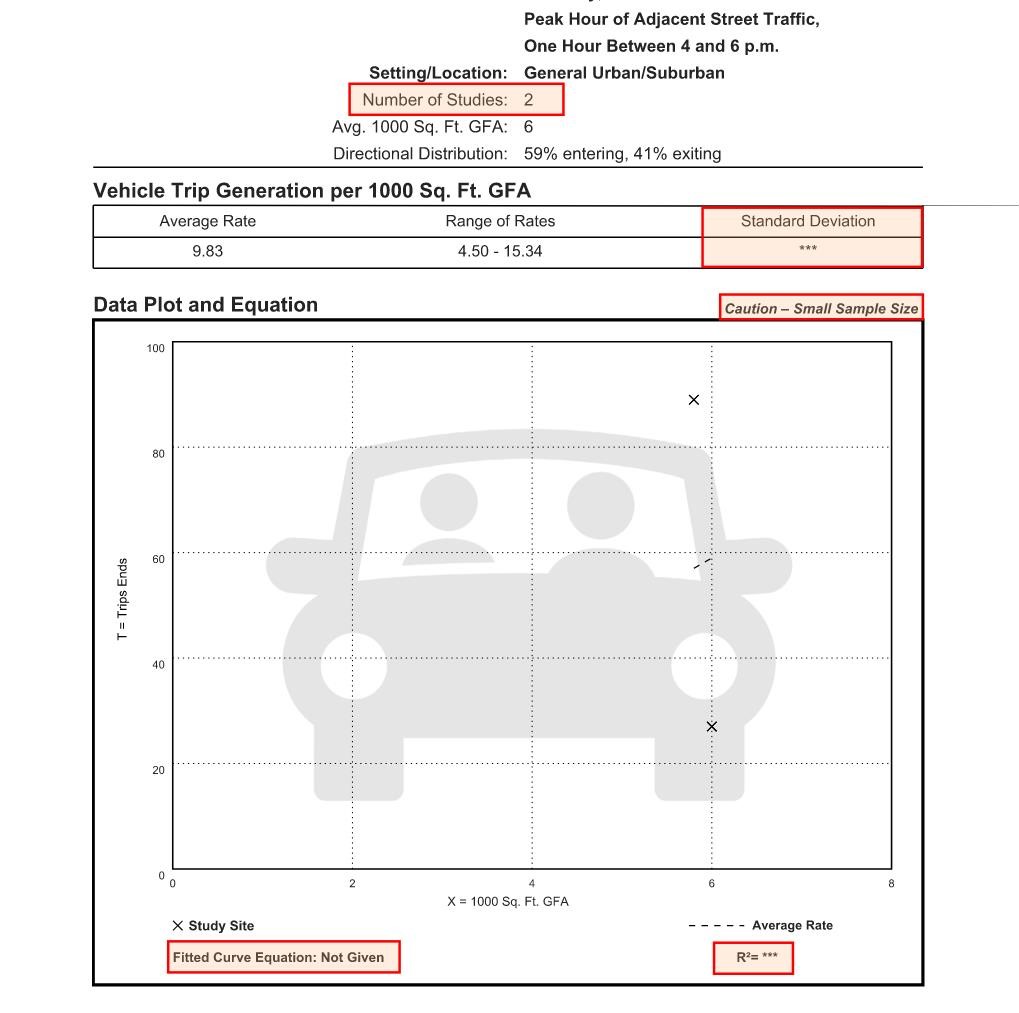
The ITE Trip Generation Manual 12th Edition provides both fitted curve equations and average trip rates for estimating trip generation. However, not all datasets are equally reliable. In many cases, there is either limited data points, or no equation provided. When preparing traffic impact studies for such land uses, engineers and planners must decide: Should […]

, , , , , , ,
turn lane warrant AASHTO
Highway Design, Pavement, Traffic Engineering, Transportation Planning

Turning Lane and Auxiliary Lane Design: Warrants, Criteria, and Best Practices

One of the most common questions in traffic impact assessments (TIAs) is whether to propose turning lanes, acceleration lanes, or deceleration lanes. While adding lanes may seem like a straightforward solution to congestion, proposing them without justification can create unnecessary cost, invite reviewer comments, or even compromise safety. In this post, we’ll explain when to

, , , , ,
Road Classification in Transportation Engineering
GIS, Highway Design, Traffic Engineering, Trainings, Transportation Planning

Road Classification in Transportation Planning

Road classification (or class) is a fundamental concept in transportation planning and traffic engineering. It provides a framework for organizing roads according to their function within the transportation network, specifically how they balance mobility (moving traffic efficiently) and access (serving adjacent land uses). Higher-class roads prioritize mobility, moving large volumes of traffic over longer distances

, , , , , , ,
Lost time Adjustment Synchro
Traffic Engineering, Trainings, Transportation Planning

Lost Time and Lost Time Adjustments in Synchro

In signalized intersection analysis, few parameters influence results as strongly and as quietly as lost time adjustment. When using Synchro or applying the Highway Capacity Manual (HCM) methodology, adjusting lost time can significantly change: Because of this sensitivity, lost time adjustments must be applied carefully, transparently, and defensibly. What is Lost Time? Lost time in

, , , ,
Saturation Flow Rate vs Lane Utilization Factor
Traffic Engineering, Trainings, Transportation Planning

Lane Utilization Factor and Saturation Flow Rate in Signalized Intersections

When performing signalized intersection analysis in tools such as Synchro or HCS, two commonly misunderstood parameters are Lane Utilization Factor (LUF) and Saturation Flow Rate (s). Both directly influence delay, capacity, and level of service calculations under the framework of the Highway Capacity Manual (HCM). This article provides a clear technical explanation of both terms

, , , ,
Pedestrian Counts
Public Transit, Traffic Engineering, Transportation & Climate Resilience, Transportation Planning

Using Pedestrian Counts in Traffic Engineering

Pedestrian counts are an essential input for intersection analysis (the main element in Traffic Impact Studies), particularly when modeling signalized intersections in software such as Synchro, Sidra, or VISUM. Unlike vehicle counts, pedestrians interact differently with traffic flows, and their impact on vehicle movements is captured through conflicting pedestrian volumes rather than directional “pedestrian flows.”

, , , ,
how to do traffic counting
Traffic Engineering, Trainings, Transportation Planning

How to Conduct Accurate Traffic Counts for Traffic Impact Studies

Traffic counts are the foundation of any Traffic Impact Assessment (TIS/TIA) and even Transportation Master Plans. Accurate traffic data ensures that intersection analyses, turning movements, and operational recommendations are reliable and defensible. This guide provides professional best practices for conducting traffic counts, including count duration, vehicle classification, intervals, intersection coordination, and the use of AI

, , , ,
Swept Path Analysis for Driveway design
Highway Design, Parking, Pavement, Traffic Engineering, Trainings, Transportation Planning

Swept Path Analysis and Vehicle Tracking in Traffic Impact Studies

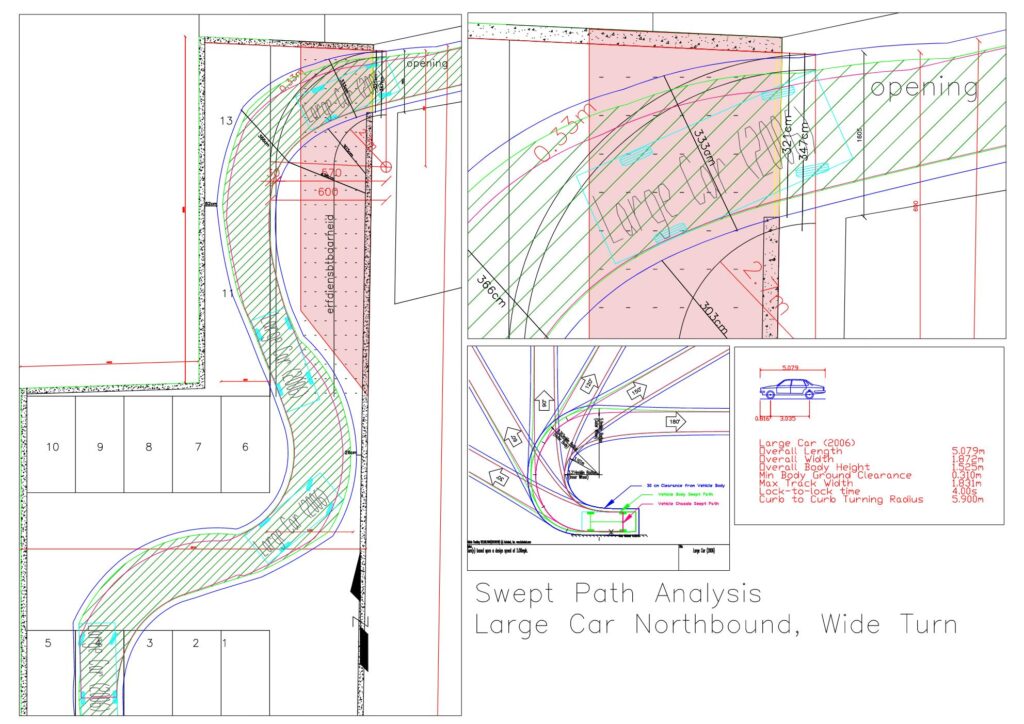
Swept path analysis (also referred to as vehicle tracking) is a core technical component of traffic engineering and site access review. It evaluates whether design vehicles can safely and realistically maneuver through intersections, site accesses, parking areas, and constrained roadway environments. For transportation planners, civil engineers, and approving agencies, swept path analysis provides defensible evidence

, , , , ,
What is ADT LOS DHV PHF in Transportation Engineering
Highway Design, Traffic Engineering, Trainings, Transportation Planning

Transportation & Traffic Engineering Abbreviations: Quick Reference Glossary

This glossary provides a comprehensive reference of commonly used abbreviations in transportation and traffic engineering. It covers terminology relevant to traffic studies, transportation planning, pavement design, and transit operations. Each entry includes a concise definition, with links to detailed guides or tools on Arterials.co, offering a reliable resource for professionals, planners, and students alike. Transportation

, , , , , ,
ITE Trip Generation Manual 12th Edition
Parking, Traffic Engineering, Trainings, Transportation Planning

ITE Trip Generation Manual 12th Edition — What’s New and How to Access It

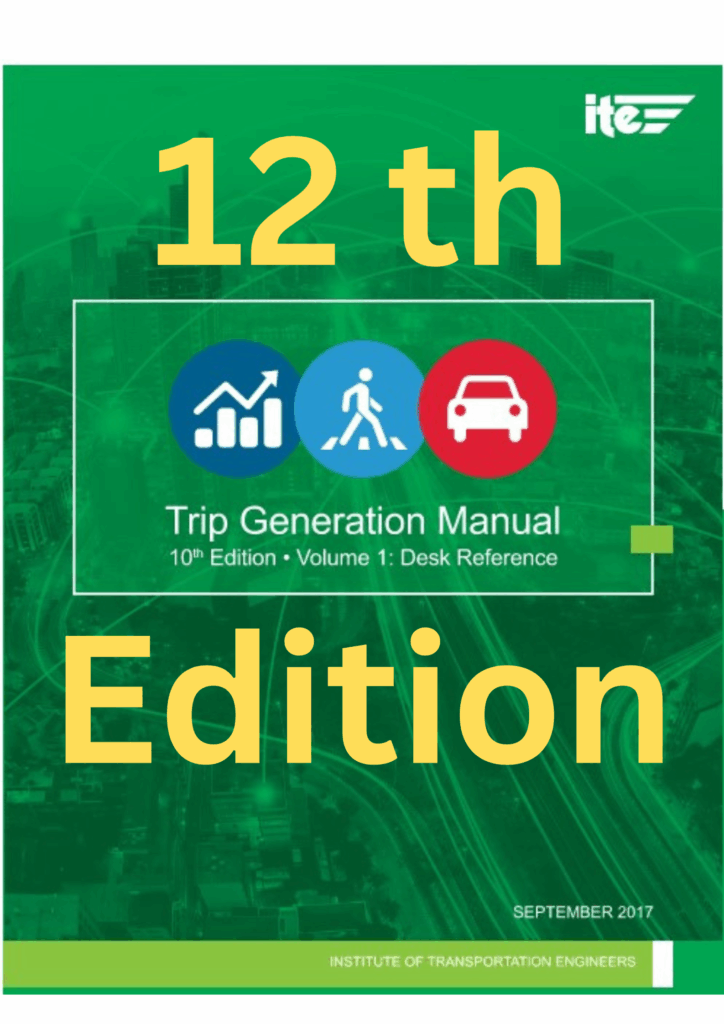
In the world of traffic engineering and transportation planning, few resources are as widely recognized (and as frustratingly hard to access) as the ITE Trip Generation Manual. With the release of the 12th Edition, transportation professionals are eager to see what’s new — but also wondering how to actually get their hands on it without

, , , , , ,
Scroll to Top