Road classification (or class) is a fundamental concept in transportation planning and traffic engineering. It provides a framework for organizing roads according to their function within the transportation network, specifically how they balance mobility (moving traffic efficiently) and access (serving adjacent land uses).
Higher-class roads prioritize mobility, moving large volumes of traffic over longer distances with limited interruptions. Lower-class roads prioritize access, allowing vehicles, pedestrians, and cyclists to reach homes, businesses, and local destinations.
Many transportation agencies formalize this hierarchy through functional classification systems, such as the framework developed by the Federal Highway Administration (FHWA) in the United States. The FHWA framework broadly divides roads into arterials, collectors, and local roads, with further sub-categories depending on their role in the network.
Understanding these classifications is essential for road design, traffic modeling, planning studies, and corridor management.
Functional Hierarchy of Roads
A typical road hierarchy moves from high-mobility regional facilities down to local access streets:
- Freeways / Motorways
- Highways / Expressways
- Arterial Roads
- Major Arterials
- Minor Arterials
- Collector Roads
- Primary Collectors
- Secondary or Tertiary Collectors
- Local Streets
Each level performs a specific role within the broader transportation system.
Freeways / Motorways
Freeways (often called motorways in many countries) represent the highest class of road in the hierarchy.
- Full access control (no driveways or direct property access)
- Grade-separated interchanges
- High design speeds (typically 90–120 km/h)
- Multiple lanes in each direction
- Median separation
These facilities are designed purely for regional and intercity mobility.

Typical Geometry of Freeways:
- 4–12 lanes total
- Wide medians or barriers
- Large interchange spacing (2–10 km)
- Long uninterrupted segments
Examples include national expressways and urban beltways.
See Standard Geometries in Road and Highway Design: Quick Reference for more information.
Highways / Expressways
Highways or expressways are also designed for high mobility, but they may have partial access control. They tend to have the following Characteristics:
- Signalized intersections may exist
- Some at-grade crossings
- Higher speeds than urban arterials
- Connect cities, regions, or major corridors
In some countries, “highway” is a general term, while in planning terminology it typically refers to regional high-capacity corridors that are not fully controlled-access freeways.

Arterial Roads
Arterial roads form the primary urban corridors that move traffic between districts, neighborhoods, and major activity centers.
A useful operational definition:
An arterial road connects different neighborhoods or localities together, providing mobility across the urban network.
Arterials are long corridors designed to carry traffic across multiple districts, often forming the backbone of a city’s road network. Arterials tend to have:
- Signalized intersections
- Moderate access control
- High traffic volumes
- Longer trip lengths
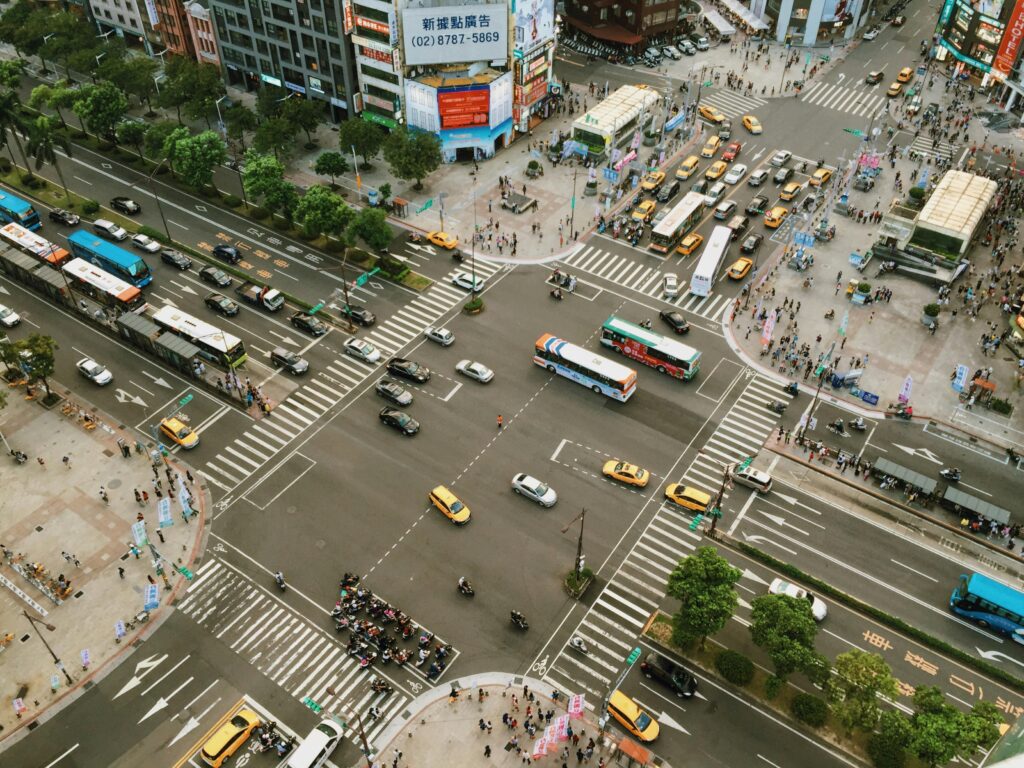
Arterials often have large cross sections, which may include:
- 4–8 travel lanes
- Dedicated turn lanes
- Medians
- Bus lanes or transit priority lanes
- Cycle tracks or sidewalks

Some arterials include public transit infrastructure, such as:
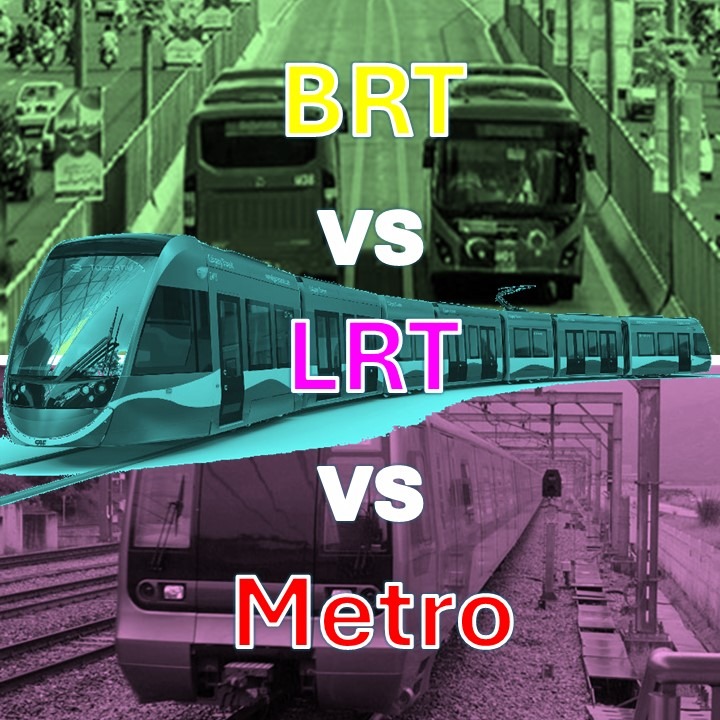
- Bus rapid transit lanes
- Median bus stations
- Transit signal priority
However, transit facilities are not required for a road to function as an arterial.
Major Arterials
Major arterials handle the largest traffic volumes within the urban street system (outside freeways).
- Connect major districts
- Link highways/freeways to urban areas
- Serve long-distance urban travel
In terms of geometry, they typically have:
- 6–8 lanes common
- Signal spacing typically 400–800 m
- Median control
- Limited driveway access
These roads often function as primary urban corridors.
Minor Arterials
Minor arterials provide connections between collector streets and major arterials.
- Distribute traffic from local areas to the arterial network
- Support medium-distance urban trips
- Provide secondary cross-town connectivity
Compared to major arterials, but not always, they have:
- 2–4 lanes
- More frequent intersections than major arterials
- Moderate access to adjacent land uses
Collector Roads
Collectors sit between arterials and local streets in the hierarchy.
Their job is to collect traffic from local streets and deliver it to arterials.
A useful conceptual definition:
Collector roads typically begin and end within the same locality, distributing traffic internally before feeding into the broader arterial network.
This contrasts with arterials, which connect multiple neighborhoods.
- Traffic distribution within communities
- Access to schools, parks, and local commercial areas
- Short to medium trips
Collectors typically include:
- 2–4 lanes
- Lower speeds (30–60 km/h)
- Frequent intersections
- Bicycle and pedestrian facilities
Primary vs Secondary or Tertiary Collectors
Primary collectors serve larger catchment areas within neighborhoods.
They may:
- Carry bus routes
- Connect several residential districts
- Feed directly into arterial roads
Some planning systems subdivide collectors further in Secondary and Tertiary Collectors
These serve smaller internal circulation roles, have shorter segments, Lower traffic volumes, and Stronger access function (larger number of driveways).
The distinction between secondary collectors and local streets often depends on traffic volume and connectivity, and how complicated one wants to make their transportation model. Sometimes less is more.
Grey Areas in Road Class
Road classification is not always rigid, and several categories often overlap.
Minor Arterial vs Collector
This is one of the most common ambiguities.
A practical distinction:
Minor Arterial
- Connects multiple neighborhoods
- Carries through traffic
- Higher mobility priority
Collector
- Circulates within one neighborhood or district
- Primarily gathers traffic for arterials
- Higher access priority
In simple terms:
Arterials connect places.
Collectors organize movement within places.
Think function, not geometry.
Collector vs Tertiary Street
“Tertiary” roads are sometimes used in mapping systems (such as GIS or open mapping databases) but are not always formal engineering classifications.
Typically:
- Tertiary road ≈ lower-level collector
- Often functions as a secondary neighborhood distributor
The terminology varies between countries and agencies.
Local Streets
Local streets form the lowest level of the hierarchy.
They provide direct access to land uses, such as:
- Residential homes
- Small businesses
- Local parking
Mobility is not a priority.

Local streets have:
- Short trip lengths
- Low speeds (20–40 km/h)
- Narrow cross sections
- High driveway density
Traffic on local streets is primarily origin-destination traffic, not through traffic.
Summary of the Functional Hierarchy
| Road Type | Primary Function | Typical Trip Length | Access Level |
|---|---|---|---|
| Freeway / Motorway | Regional mobility | Long | None |
| Highway / Expressway | Intercity or regional travel | Long | Limited |
| Major Arterial | Cross-city corridors | Medium–long | Limited |
| Minor Arterial | District connectivity | Medium | Moderate |
| Collector | Neighborhood distribution | Short–medium | Moderate–high |
| Local Street | Direct property access | Short | Very high |
Road Classification and the Complete Streets Approach
Modern transportation planning increasingly emphasizes Complete Streets; corridors designed to safely accommodate all users, including pedestrians, cyclists, transit riders, and motorists.
The concept is widely promoted by organizations such as the National Complete Streets Coalition.
However, not all road classes are equally suited for full complete-street transformation.
Priority Corridors for Complete Streets
Arterials (especially minor arterials)
These corridors often connect major destinations such as employment centers, universities, and transit hubs. Because of their long continuous segments and high demand, they are ideal candidates for:
- Bus lanes or BRT
- Protected bicycle infrastructure
- Wide pedestrian facilities
- Median refuges
Collector Roads
Collectors are often located within neighborhoods and therefore benefit significantly from:
- Traffic calming
- Bike lanes
- Enhanced pedestrian crossings
- Transit stops
Collectors can become important multimodal connectors between local streets and major corridors.
Where Complete Streets Is Less Critical
Freeways and motorways generally remain vehicle-dominated facilities, although parallel active transportation corridors may be provided nearby.
Local streets, meanwhile, already function as low-speed shared environments, where traffic calming and pedestrian priority are typically more appropriate than large-scale infrastructure changes.
Why Functional Classification Matters
Road classification influences many aspects of transportation planning, including:
- Roadway geometry
- Lane widths
- Signal spacing
- Access management
- Transit corridor planning
- Traffic modeling
Correctly identifying the functional class of a roadway helps ensure that the transportation network balances mobility, safety, and accessibility.
Ultimately, road hierarchies are not just labels. They represent the structural logic of how cities move.
Frequently Asked Questions (FAQ)
What is the difference between an arterial road and a collector road?
An arterial road connects different neighborhoods or districts, allowing traffic to move across a city or region. A collector road, on the other hand, typically circulates within a single neighborhood, collecting traffic from local streets and directing it toward arterial corridors.
What is the main purpose of road classification?
Road classification helps transportation planners define the function of each road in the network. Some roads prioritize mobility and long-distance travel, while others prioritize access to homes, businesses, and local destinations.
What are the main functional classes of roads?
According to frameworks used by agencies like the Federal Highway Administration, most road networks are organized into three main functional categories:
- Arterials
- Collectors
- Local roads
Higher-capacity facilities such as freeways and expressways typically sit above arterials in the hierarchy.
Are highways and freeways the same thing?
Not necessarily. A freeway is a fully controlled-access road with no at-grade intersections, while a highway is a broader term that can refer to regional roads that may still have signalized intersections or direct access points.
What is a tertiary road?
A tertiary road is commonly used in mapping systems and GIS datasets to describe lower-level collector roads. These roads generally provide neighborhood circulation and local connectivity, carrying moderate traffic volumes.
Why do arterial roads usually have larger cross sections?
Arterial roads carry higher traffic volumes and longer trips, so they often require more lanes, medians, turning lanes, and sometimes transit facilities to maintain mobility and safety across longer corridors.