Swept path analysis (also referred to as vehicle tracking) is a core technical component of traffic engineering and site access review. It evaluates whether design vehicles can safely and realistically maneuver through intersections, site accesses, parking areas, and constrained roadway environments.
For transportation planners, civil engineers, and approving agencies, swept path analysis provides defensible evidence that a design works not only on paper, but in real-world operating conditions.
What is swept path analysis?
Swept path analysis simulates the physical movement of a vehicle as it turns, reverses, or navigates constrained spaces. Unlike simple turning-radius checks, it accounts for:
- Vehicle geometry (wheelbase, overhangs, articulation)
- Steering behavior, forward and reverse
- Speed and maneuvering constraints
- Encroachment into adjacent lanes, curbs, or sidewalks
The result is a realistic swept envelope showing where a vehicle’s body and wheels travel during a maneuver.
Why swept paths matter in traffic and site design
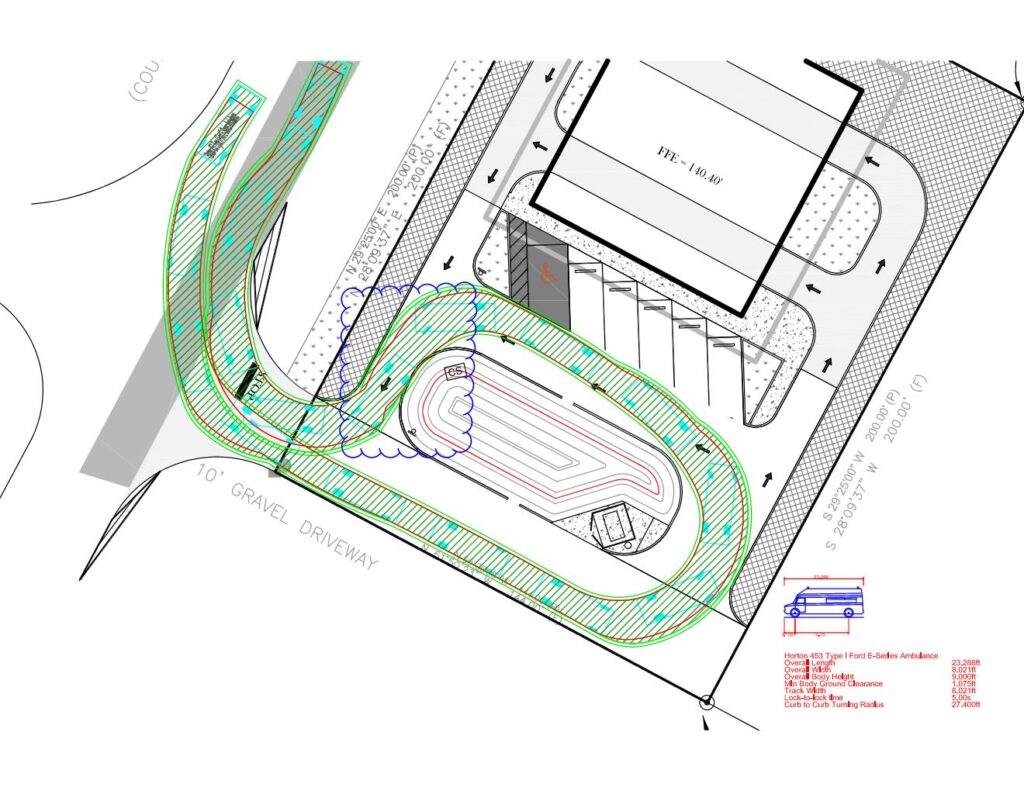
Many access and circulation issues are not visible in plan view alone. Swept paths help identify problems early, including:
- Vehicles mounting curbs or encroaching into opposing lanes
- Conflicts with pedestrians, cyclists, or street furniture
- Insufficient driveway widths or curb radii
- Inadequate loading, servicing, or emergency access
From an approval perspective, swept path drawings are often a required submission element for traffic impact studies, site plan approvals, and access permits.
Typical applications
Swept path analysis is used across a wide range of transportation and engineering scenarios:
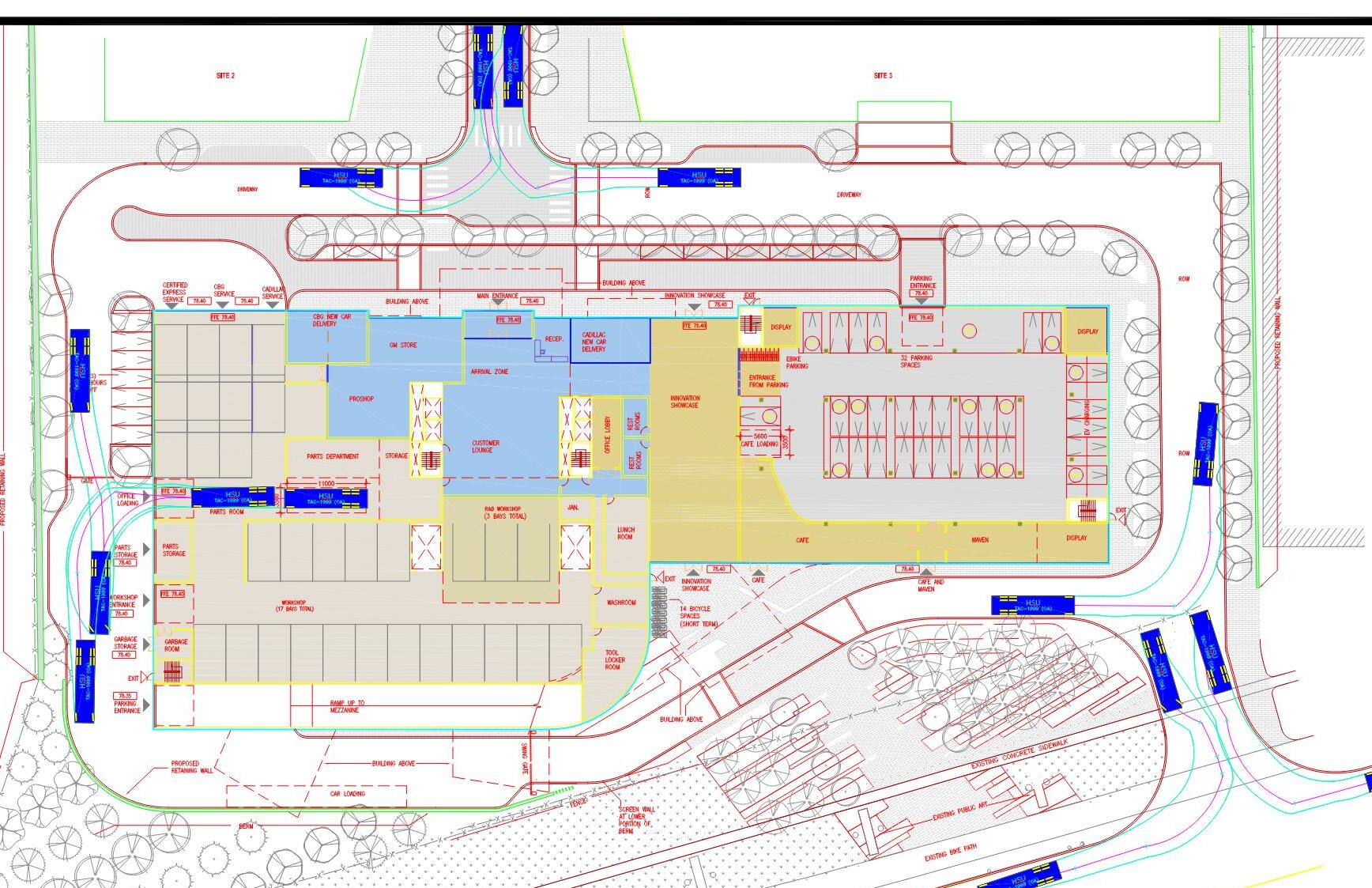
Swept Path / AutoTURN / Vehicle Tracking in Site plan and development review
- Driveway access design
- Internal circulation and queuing. Can two vehicles comfortably pass each other?
- Loading dock access
- Garbage and service vehicle movements
Intersection and roadway design
- Turn lane feasibility
- Median and curb return design
- Roundabout entry and exit movements
- Lane encroachment assessment
Parking layout checks
- Stall geometry and aisle widths
- Conflicts between parked vehicles and through movements
- Feasibility of larger vehicles in constrained garages
Emergency vehicle access
- Fire truck turning paths
- Ladder truck, ambulance, police car access to buildings
- Compliance with municipal fire code requirements
Construction and logistics planning
- Access for dump trucks and concrete mixers
- Oversized or articulated vehicle movements
- Temporary access conditions during construction staging
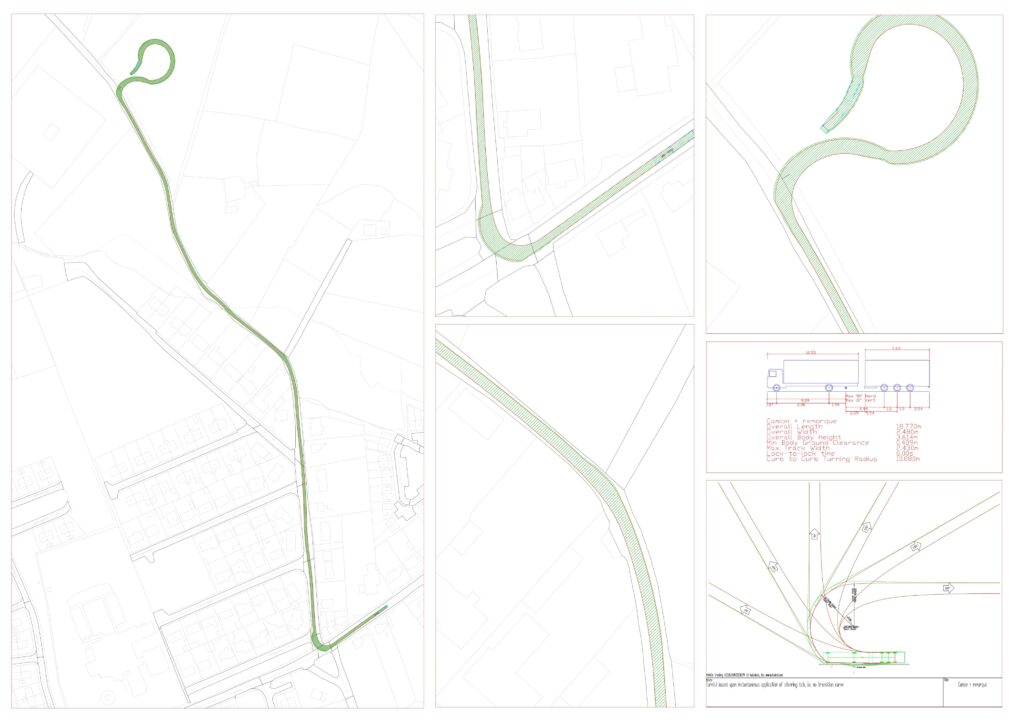
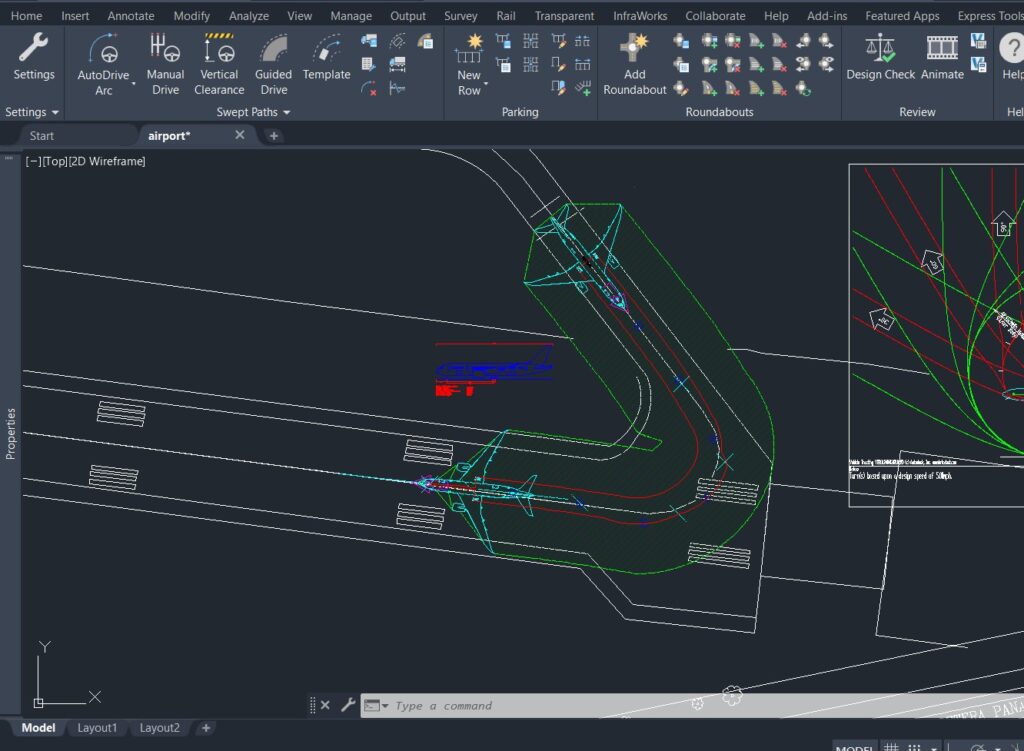
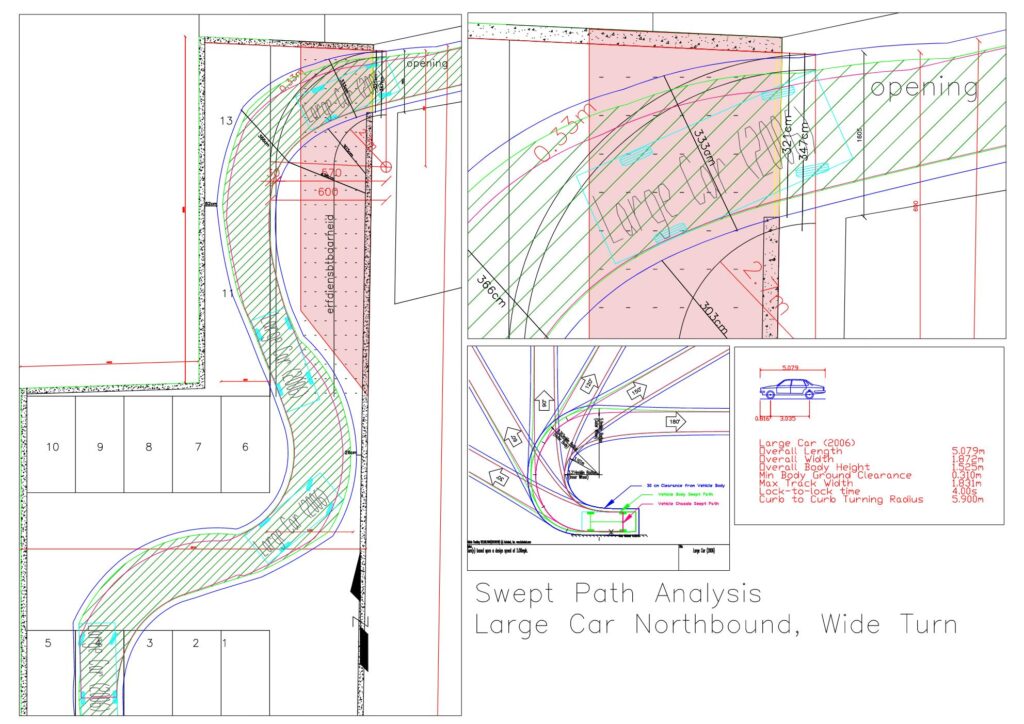
Design vehicles and standards
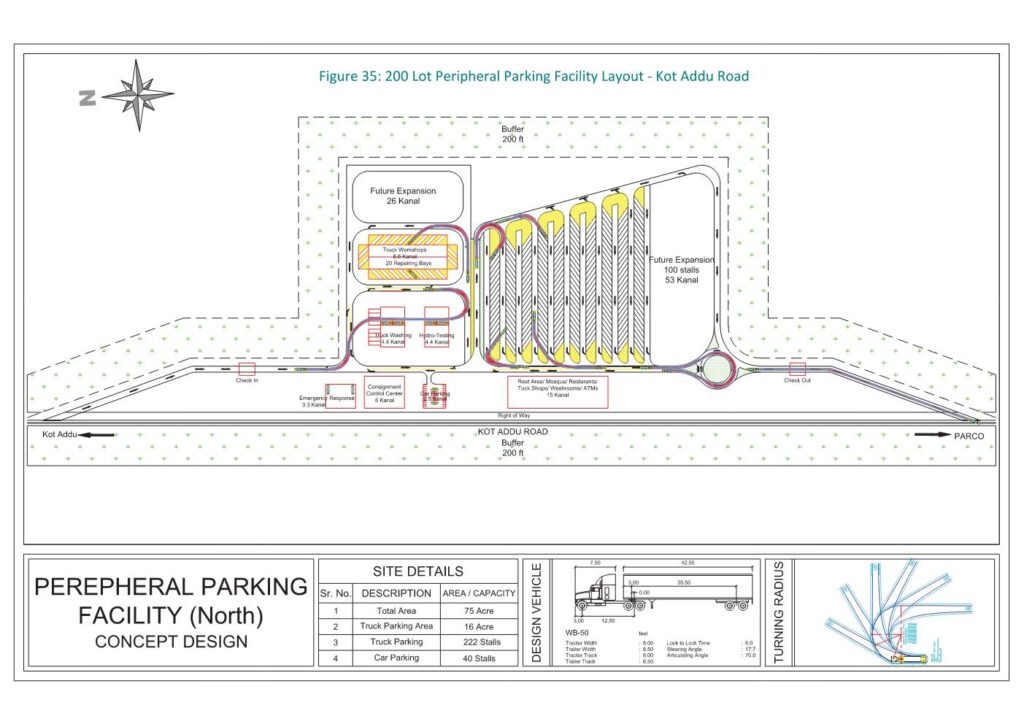
A defensible vehicle tracking analysis depends on selecting the correct design vehicle.
At Arterials, we work with a comprehensive library of standard and custom vehicles, including:
- AASHTO design vehicles
- TAC (Transportation Association of Canada) vehicles
- European standard design vehicles
- Emergency and municipal service vehicles
- Transit buses and articulated buses
- Custom vehicles created from manufacturer specifications (wheelbase, axle spacing, overhangs)
Vehicle selection is always aligned with the governing jurisdiction’s design standards and the operational context of the site.
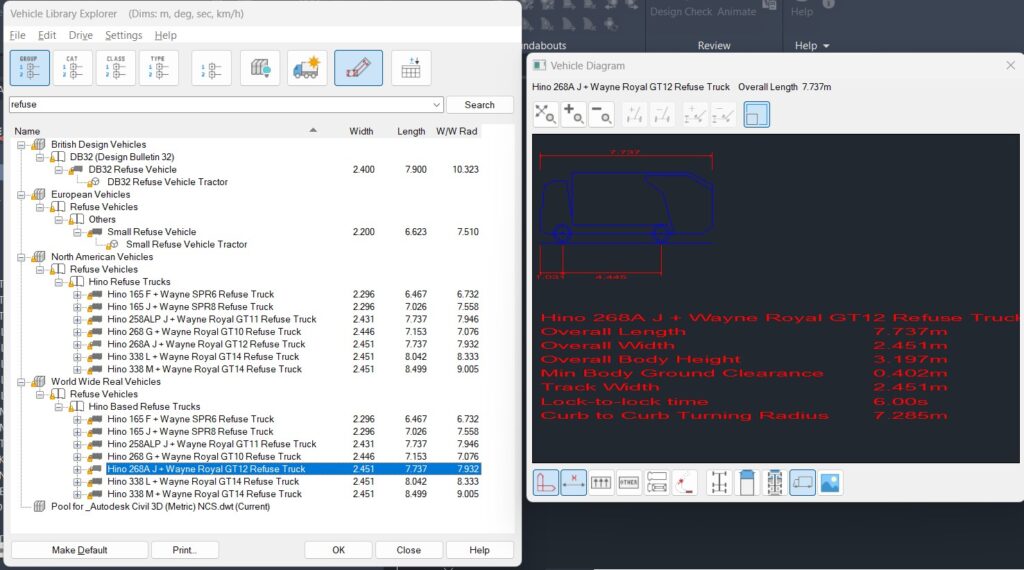
How swept path analysis is performed
While the tools are important, methodology and judgment matter more.
A typical workflow includes:
- Reviewing the proposed geometry and applicable design standards
- Selecting appropriate design vehicles based on site function
- Simulating critical movements (entry, exit, reversing, loading)
- Assessing conflicts, encroachments, and clearance requirements
- Refining geometry where needed
- Preparing clear, agency-ready drawings
The focus is not just on passing a movement, but on ensuring it is reasonable, repeatable, and safe.
Best practices for defensible results
- Use the largest realistic design vehicle, not the smallest possible one
- Test worst-case movements, not just ideal paths
- Document assumptions and vehicle parameters clearly. Always include vehicle profile and turning template in drawings.
- Avoid over-optimizing geometry to unrealistic steering behavior
- Coordinate swept paths with pedestrian, cycling, and transit considerations
These practices help avoid redesign late in the approval process.
Swept paths as part of Traffic Impact Studies
Swept path analysis is often integrated directly into Traffic Impact Studies (TIS/TIA) to support:
- Access spacing and driveway justification
- Intersection design feasibility
- Servicing and loading assessments
- Parking and circulation adequacy
- Emergency access compliance
Agencies rely on these analyses to confirm that proposed developments will function safely within the existing transportation network.
Arterials swept path and vehicle tracking services
At Arterials, swept path analysis is provided as a standalone service or as part of a broader traffic engineering scope. We routinely support:
- Developers and architects during site design
- Engineering firms requiring independent review
- Contractors seeking permits based on site accessibility
- Municipal and agency submissions
For ongoing development programs, we also offer retainer-based support, allowing rapid turnaround for iterative site layouts, design revisions, and agency comments.
Our focus is on technically sound, clearly documented, and approval-ready deliverables that align with jurisdictional standards.
For AutoTURN analysis, vehicle tracking, or traffic engineering support, visit Arterials.co or contact us to discuss your project requirements.
Swept Path & Vehicle Tracking – FAQ
What is swept path analysis?
Swept path analysis checks whether a vehicle can physically complete a maneuver without hitting curbs, buildings, or other constraints.
Vehicle tracking vs swept path analysis. what’s the difference?
Vehicle tracking is the software-based simulation; swept path analysis is the engineering check and documented outcome.
Why is swept path analysis required in traffic impact studies?
Agencies require it to confirm safe access for design vehicles, service trucks, and emergency vehicles during site plan review.
What software is used for swept path analysis?
AutoTurn and Autodesk Vehicle Tracking are the most commonly used tools in transportation and site design.
What is a vehicle envelope?
A vehicle envelope represents the full space occupied by a vehicle during a maneuver, including overhangs and wheel paths.
Can custom vehicles be modeled?
Yes. Vehicles can be built from manufacturer specifications when standard design vehicles are not appropriate.
What are typical swept path use cases?
Site access, parking layouts, emergency access, construction staging, and oversized vehicle movements.
Is swept path analysis only for roads?
No. It is frequently required for internal site circulation, parking areas, and constrained urban sites.